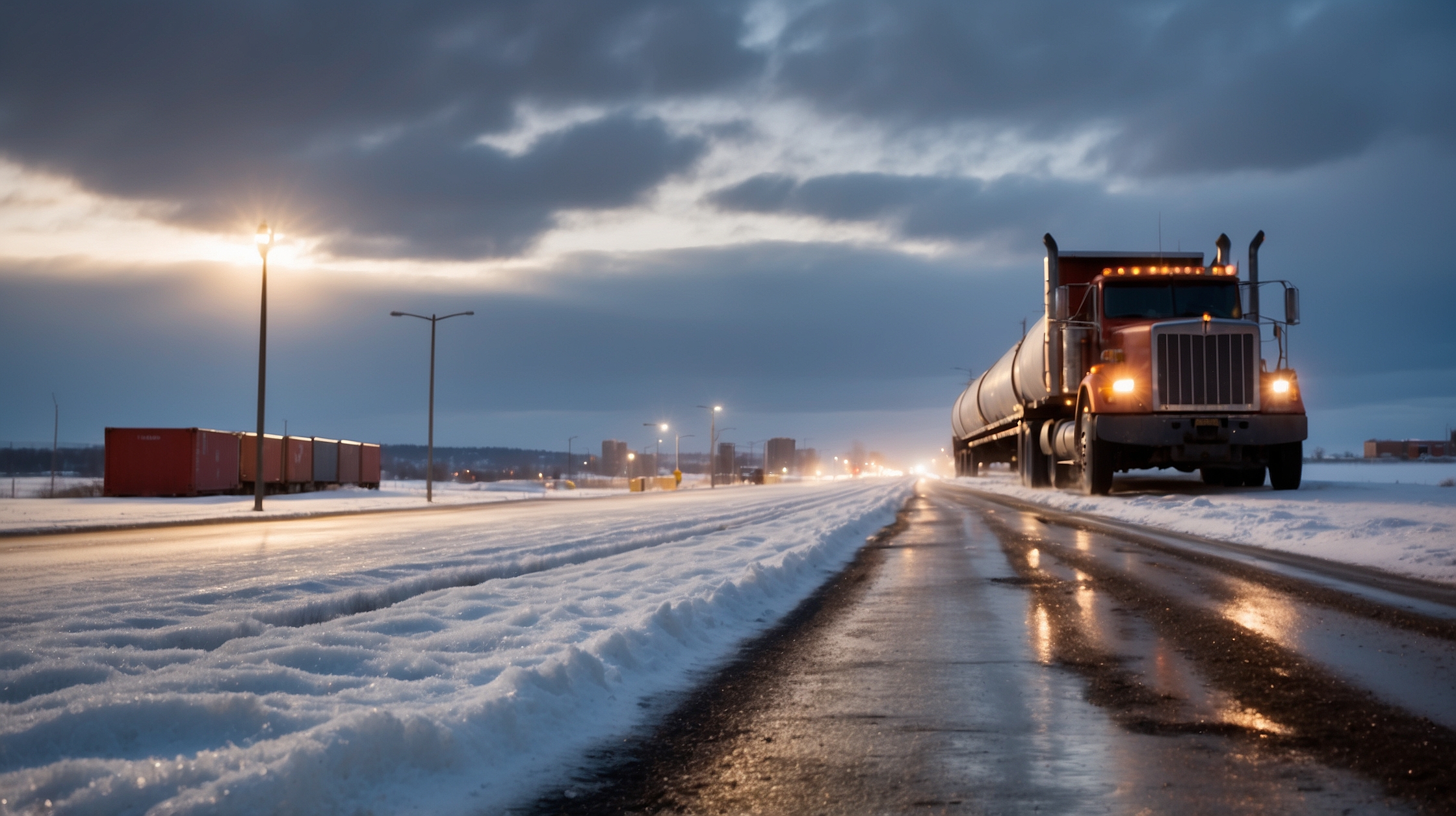
The surprising shortage of road salt in Ontario this winter has left municipal governments scrambling to ensure the safety of their streets and highways. As icy conditions persist and snowstorms become increasingly frequent, many Ontario towns and cities are sounding the alarm over low inventories of road salt—the crucial winter weapon used to de-ice roads and prevent traffic accidents.
While Ontario municipalities are warning about running out of salt mid-winter, what’s especially frustrating is that much of Canada’s domestically-mined salt continues to be exported for profit to the United States. This polarizing gap between rising local demand and ongoing export priorities is fueling frustration, as public works departments contend with budget shortfalls, municipal supplier disputes, and changing climate patterns that have disrupted usual salt ordering systems.
This disconnect has called attention to long-standing supply chain issues and market structures that prioritize global contracts over local need. It’s left many Ontarians questioning: why is our own road salt being shipped across the border while we run short during one of the coldest winters in recent memory?
Road salt supply in Ontario: Key facts at a glance
| Primary Issue | Ontario municipalities reporting road salt shortages during winter 2023–24 |
| Main Cause | Ongoing exports of Canadian-mined salt to U.S. under fixed contracts |
| Affected Parties | Municipal governments in Ontario, public safety workers, residents |
| Salt Origin | Major mines in Ontario and Quebec (e.g., Goderich mine) |
| Alternative Solutions | Using sand, reducing salt usage, emergency salt-sharing with other towns |
Why Ontario cities are seeing a road salt supply crunch
At face value, it may seem implausible that within Canada—a country renowned for cold winters and ample natural resources—there would be a shortage of something as basic as road salt. Yet municipalities across Ontario have been reporting difficulties fulfilling their winter salt orders, and the root causes are both complex and systemic.
One major factor is that road salt mining and distribution in Canada is largely controlled by private companies with pre-existing international contracts. Much of the salt produced in Canada’s massive salt mines, such as those in Goderich, Ontario—a facility known as the largest underground salt mine in the world—is contracted to export markets, especially in the northern and midwestern U.S., where demand is similarly high in the winter months.
These contracts often outweigh municipal capacity to respond to unpredictable climate patterns. “The salt has to go where the contracts go,” a municipal source noted, highlighting that by the time Ontario cities place their orders each fall, much of Canada’s mined salt is already spoken for.
What changed this year to make the problem worse
While Ontario has faced salt shortages before, municipalities say the logistical problems have worsened this year due to a convergence of several factors:
- Unpredictable winter weather patterns — Above-normal snowfall in some regions caught public works departments off-guard, requiring more salt earlier than expected.
- Labor and transportation constraints — Reduced trucking availability and rising fuel costs delayed deliveries and increased costs for some vendors.
- Market consolidation — Some municipalities are tied to a single supplier after competitive procurement processes, leaving them few alternatives during market shortfalls.
- Export-first priorities — With U.S. buyers locked into higher-paying contracts, local governments sometimes fall to the back of the line.
These dynamics created what one city official called a “perfect storm of constraints,” pushing some towns to ration their usage by mixing salt with sand or prioritizing only critical transit corridors.
How cross-border contracts create local shortages
Under free-market rules, Canadian salt producers have the right to fulfill profit-oriented contracts—including export deals. However, some critics argue that in the midst of emergency conditions, local needs should be given priority. Municipalities typically buy salt via competitive bid processes in the spring or summer—well ahead of winter. But if the season turns out to be harsher than expected, there’s limited ability to ramp up procurement once stocks run low.
“The problem isn’t how much salt we have. The problem is who gets it, and when,” said a procurement officer with a mid-size Ontario city. “It feels like the U.S. orders are written in stone, while we’re stuck negotiating on the fly when weather changes.”
Ontario mayors have called on the province to consider setting aside a reserve supply of road salt either stored centrally or on a regional basis, similar to how gasoline and other fuel reserves are handled during shortages. Some have also called on the federal government to revisit trade policies to guarantee domestic municipal access during climate emergencies.
Winners and losers of the current salt supply structure
| Winners | Losers |
|---|---|
| Private salt mining companies with export contracts | Ontario municipalities running short on salt |
| U.S. states receiving dependable Canadian salt shipments | City residents facing icy sidewalks and under-maintained roads |
| Logistics companies fulfilling U.S. distribution | Public works departments placed at budgetary risk |
Why municipalities are slow to change suppliers
Switching road salt suppliers isn’t just a matter of choosing a different vendor. Procurements are legally bound to terms of service agreements, volume discounts, and infrastructure compatibility. Salt is stored, loaded, and spread using calibrated systems and vehicles designed for specific product types or granule sizes. Any changes can introduce risk and expense.
“You can’t just switch on a dime,” explained one fleet manager. “Road salt isn’t one-size-fits-all. If our storage domes, trucks, and output controls are calibrated for one supplier’s blend, we can’t easily substitute from someone else without recalibration and testing.”
Short-term responses being implemented
Several Ontario cities have initiated stop-gap plans to stretch their dwindling salt reserves while exploring emergency supply sharing agreements among neighboring municipalities. Some are increasing reliance on sand or liquid de-icers. Others are changing their plow frequency standards to use less material per kilometre of road during milder snowfalls.
“We’re doing more with less. It’s not ideal, but we have to prioritize emergency routes and high-traffic areas.”
— Public Works Director, Southwestern Ontario
Calls for longer-term solutions
Municipal officials and policy advocates are urging provincial and federal involvement to create a more stable and equitable salt supply chain for the future. Potential suggestions include:
- Establishing provincial salt reserves or emergency bulk purchases
- Including “domestic priority clauses” in federal export legislation
- Funding for new salt storage capacity in areas with persistent shortages
- Climate-adjusted procurement models based on multi-year snowfall data
Advocates also suggest investing in alternative de-icing technologies and sustainable surfaces that reduce dependence on salt altogether. But such changes would require significant budget support and public education to implement.
Short FAQs
Why is Canada exporting road salt to the U.S. during a shortage?
Canadian salt mining companies have long-standing contractual obligations with U.S. buyers. These contracts often prioritize exports because they offer larger volumes and higher prices, leaving less flexibility for unanticipated domestic demand.
Which Ontario cities are most affected by the shortage?
Cities across all regions, including the Greater Toronto Area and northern Ontario towns, have reported supply issues. Smaller municipalities with limited storage capacity are especially vulnerable.
Can municipalities just buy salt from a different supplier?
Not easily. Municipalities must follow procurement rules, and equipment is often specialized to accommodate specific salt blends. Switching suppliers mid-season can be costly and risky.
Has the government responded to the issue?
At present, Ontario has not implemented a centralized reserve system. Some officials have called on the province and federal government to intervene by creating emergency stockpiles or revising export practices.
What alternatives to road salt are being used?
Sand, brine solutions, and treated salt blends are being used more frequently. Some municipalities are altering plow schedules and reducing salt application rates for non-essential roads.
Could this happen again next winter?
Yes. Without systemic changes in procurement, storage, distribution, and government support, similar shortages could recur if weather patterns remain unpredictable.

Related Posts