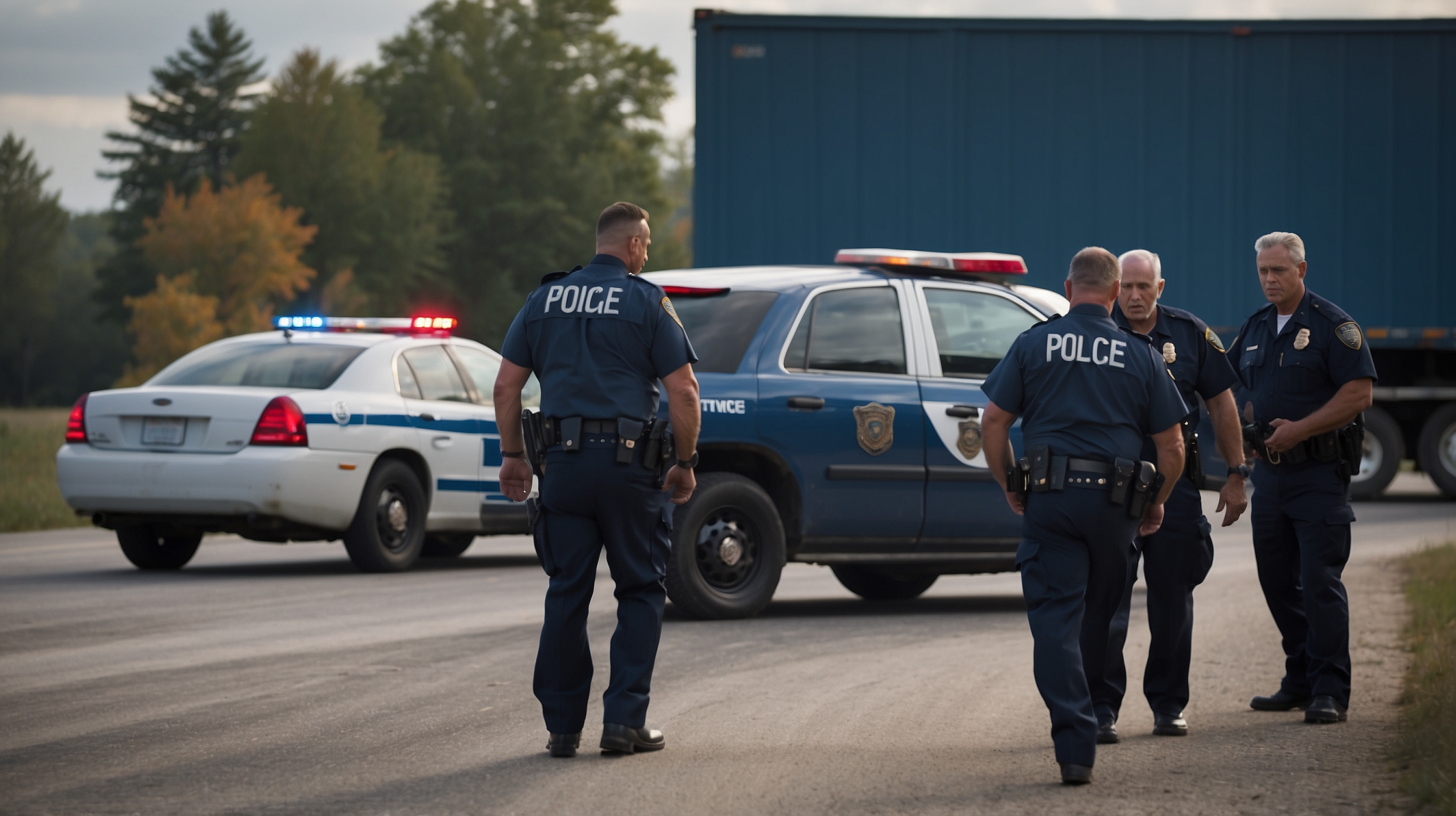
Ontario provincial police have uncovered and dismantled a large-scale, coordinated scheme that allowed unqualified individuals to fraudulently obtain commercial truck driving licenses. According to investigators, the elaborate operation involved licensed truck training schools, driving examiners, and aspiring drivers who colluded to falsify test results and teacher endorsements in exchange for payment. The investigation, which was carried out over several months, has highlighted serious concerns about public safety and regulatory oversight in the commercial trucking industry.
The news comes at a time when commercial trucking in Canada is under heightened scrutiny, particularly as the country continues to deal with supply chain disruptions and labor shortages. What sets this investigation apart is the scale of the operation and the level of sophistication alleged. Police say the individuals involved bypassed mandatory training processes, potentially putting thousands of unqualified drivers behind the wheels of large commercial vehicles on Ontario’s roads—vehicles that require an elevated level of skill, caution, and responsibility to operate safely.
According to investigators, this wasn’t a case of isolated incidents. Rather, the operation paved a backdoor route into the industry, undermining the integrity of the licensing process. Multiple arrests have been made, and police say additional charges may be pending as they continue to explore the full extent of the scheme’s impact. With public safety at risk and the trucking industry’s reputation on the line, questions are now being raised about existing oversight mechanisms and the vulnerabilities that allowed this scheme to flourish.
Key facts from the Ontario truck testing fraud investigation
| Location of Investigation | Ontario, Canada |
| Primary Agencies Involved | Ontario Provincial Police (OPP), Ministry of Transportation |
| Offences Identified | Fraud, forging documents, breach of trust |
| Suspects Involved | Licensed truck training schools, examiners, test subjects |
| Main Risk Identified | Unqualified drivers potentially operating large commercial vehicles |
| Implications | Public safety threat, regulatory review underway |
How the alleged scheme operated
According to information provided by Ontario police, the alleged fraud centered around the manipulation of the commercial truck driving test and licensing process. Several private training schools that were licensed to operate by the Ministry of Transportation were implicated in the scheme. These schools reportedly accepted bribes from students in exchange for falsifying training records and certifying individuals as qualified—even if they had never completed the necessary practical or theoretical instruction.
But the operation went even further. Investigators believe that some officials administering the test were complicit, allowing candidates to bypass standard exams or altering test results. In other instances, observers were misled into believing that the students had passed evaluation checkpoints. Police say they have forensic evidence including falsified records, financial transactions, and eyewitness testimony that confirm a deliberate pattern of circumventing legal protocols.
The scale and consequences of compromised road safety
More than a dozen individuals have already been arrested, with further suspects under investigation. Yet one of the most alarming aspects is the potential number of fraudulent licenses that may be circulating. While exact figures have not been made public, sources indicate that hundreds, possibly thousands, of licenses may have been obtained through illegitimate means.
Such a scenario introduces enormous risk, as commercial vehicles can weigh tens of thousands of pounds and often travel at high speeds. A single error made by an unqualified driver can lead to tragic consequences: fatal accidents, multi-vehicle pileups, hazardous material spills, and long-term traffic disruption. Ontario authorities have acknowledged the gravity of the issue and are now taking steps to revoke licenses that were fraudulently obtained and retrain drivers who may not have received proper instruction.
“This is not just a matter of paperwork—it’s a matter of lives. We’re talking about massive vehicles operated by people who may not have been properly trained.”
— Inspector Dominic Chong, Ontario Provincial Police
Winners and losers of the license fraud crackdown
| Winners | Losers |
|---|---|
| Law-abiding commercial drivers | Fraudulent training schools and corrupt officials |
| Public road users | Individuals who obtained licenses illegitimately |
| Regulatory agencies regaining trust | Commercial trucking industry’s public image |
Steps being taken by Ontario and federal authorities
The Ontario Ministry of Transportation, along with federal partners, is working to address the gaping loopholes exposed by the investigation. Key measures being introduced or evaluated include stronger oversight of third-party training providers, improved digitization of training logs and exam data to prevent tampering, and more frequent audits of driving schools and testing centers.
Additionally, those who received licenses through this fraudulent network are being called in for re-evaluation. In some cases, licenses are being suspended pending re-examination. Industry groups are largely in support of the crackdown, noting that unqualified drivers damage not only safety but also erode the legitimacy of the entire industry.
“We support transparent investigations and stronger regulatory frameworks. It’s time to build a safer, better-trained trucking workforce.”
— Placeholder, President of Ontario Trucking Association
Impacts on the trucking industry and regulatory credibility
The commercial transport industry is a backbone of Canada’s economy. With tens of thousands of loads transported across provinces every day, even a fraction of unqualified drivers introduced into the mix could result in disproportionate dangers. The revelations from this investigation could not have come at a worse time: the industry is already facing driver shortages, rising fuel costs, and pressure to meet demand quickly.
Regulatory bodies now face the challenge of regaining public trust and industry confidence. Enhancing digital record-keeping, real-time verification of test results, and whistleblower protections for school staff may be part of the long-term solution. For now, the priority remains public safety—ensuring that every person authorized to drive a commercial vehicle in Ontario has genuinely earned that privilege through training and examination.
Legal ramifications for parties involved
Those apprehended face a wide spectrum of legal charges that could include fraud, forgery, conspiracy to commit a criminal offence, and breach of public trust, depending on their role in the operation. Individuals who obtained licenses through this network could also face license revocation, mandatory re-testing, and potentially further legal action if implicated directly in the scheme.
Legal experts note that the penalties for this kind of systemic fraud can be severe, especially if it can be demonstrated that safety violations or accidents occurred as a result. Driving schools found complicit face the possibility of losing accreditation, hefty fines, and closure. The ripple effects will be long-lasting, touching everything from insurance premiums to employment vetting processes.
Increased scrutiny on training programs and testing centers
If there’s a clear lesson from this investigation, it’s the urgent need for enhanced scrutiny. Training programs need to adopt modern technology to track learning progress honestly and transparently. Testing centers must implement secure verification protocols to ensure integrity at every step of the license pathway.
Government agencies, already overwhelmed by the administrative load of maintaining test and license data, may need to lean on automation and AI systems to assist with real-time fraud detection and examiner accountability. Public confidence depends on assurance that every licensed commercial driver has gone through the fair and required rigorous process of assessment. Anything less puts everyone at risk.
Frequently asked questions about the Ontario truck driving license probe
What prompted the investigation into trucking license fraud?
Authorities launched the investigation after multiple red flags emerged, including inconsistencies in training records and results, as well as tip-offs from whistleblowers within the system.
How many schools and individuals are implicated so far?
While the investigation is ongoing, several licensed training schools and over a dozen individuals have been identified and charged, with more people likely to face scrutiny as audits continue.
What charges are the accused facing?
The charges range from fraud and document forgery to conspiracy and breach of trust. These are serious offences that can result in significant prison time and fines.
Are drivers who obtained licenses through these means being penalized?
Yes. Many have already had their licenses suspended or revoked, and most are required to undergo retesting. Those found to have participated knowingly could face legal action.
What changes are being made to prevent this in the future?
Authorities are implementing stricter monitoring, more frequent audits, and better digital tracking of training and testing processes to close loopholes that allowed the fraud to occur.
How can the public report suspicious driving schools?
Individuals can report concerns directly to the Ministry of Transportation or local law enforcement, and whistleblower protections are being reviewed to ensure anonymity and safety.

Related Posts