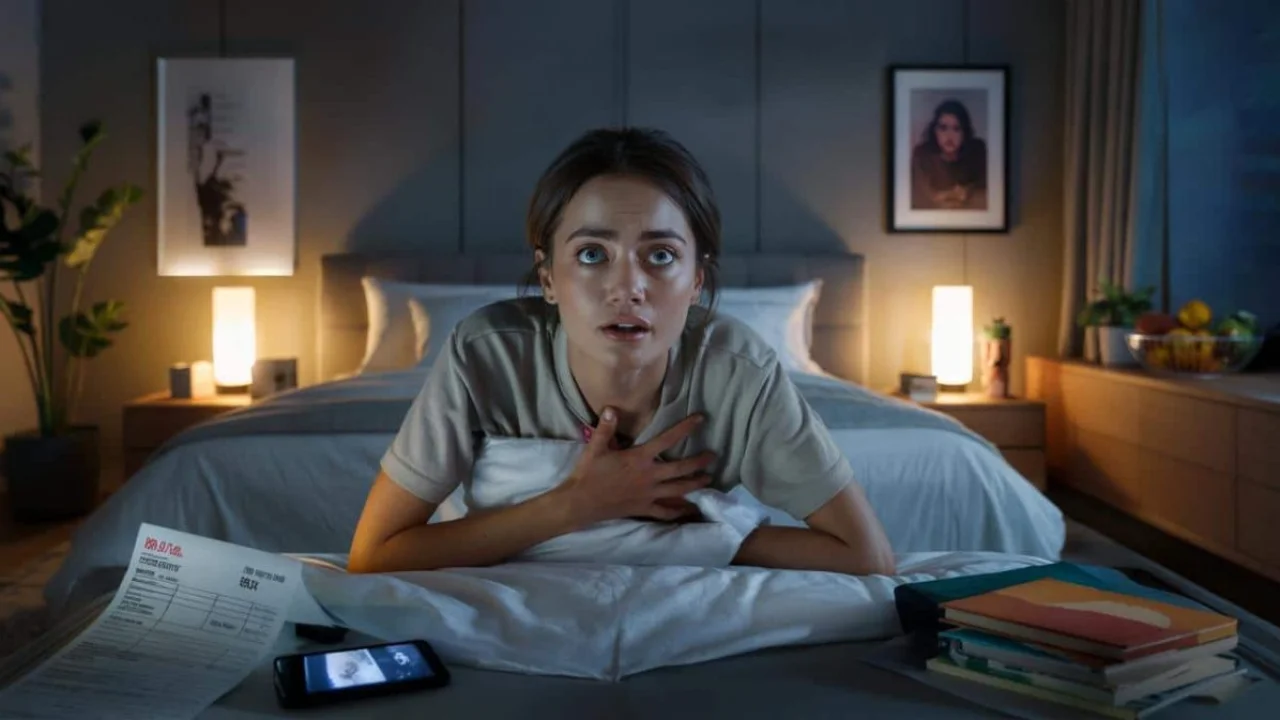
Sarah stares at her phone screen, lying in bed at 11:47 PM. She’s been “relaxing” for the past two hours, but her jaw is clenched and her mind is racing through tomorrow’s meeting agenda. Again. Her husband sleeps peacefully beside her while she mentally reorganizes her email folders for the third time this week.
She knows she should just put the phone down and sleep. But every time she tries, her chest tightens with a familiar anxiety. What if she misses something important? What if she falls behind? The irony isn’t lost on her – she’s exhausted from trying so hard to relax.
Sarah isn’t alone. Millions of people struggle with what psychologists call the inability to relax, and the reasons run much deeper than simply being “too busy” or “stressed out.”
When Your Nervous System Refuses to Power Down
The inability to relax often starts in your nervous system, not your schedule. Some people’s brains are wired to interpret rest as danger, creating a constant state of low-level alertness that feels impossible to shake.
Dr. Emma Richardson, a clinical psychologist specializing in anxiety disorders, explains: “For many people, their nervous system learned early that letting their guard down wasn’t safe. Maybe chaos erupted whenever they relaxed as children, so their brain filed away the lesson: stay alert, stay safe.”
This creates what researchers call hypervigilance – a state where your stress response system never fully returns to baseline. Even during vacation or quiet evenings at home, your body maintains a subtle tension, like a smoke detector with a dying battery that keeps chirping.
The physiological signs are telling. People who can’t relax often experience elevated cortisol levels, faster heart rates during rest, and muscle tension they don’t even notice until someone points it out. Their shoulders sit slightly raised, their breathing stays shallow, and their eyes dart around even during supposedly peaceful moments.
The Psychology Behind Perpetual Tension
Beyond the biological factors, several psychological patterns contribute to the inability to relax. Understanding these can help explain why some people feel genuinely uncomfortable when they try to unwind.
- Perfectionism: The belief that any downtime equals lost productivity or falling behind
- Guilt and shame: Feeling undeserving of rest or relaxation
- Control issues: Fear that something will go wrong if they’re not constantly monitoring
- Identity fusion: Self-worth becomes tied to constant achievement and busyness
- Trauma responses: Past experiences that taught the brain to stay alert for threats
| Relaxation Challenge | Typical Thoughts | Physical Symptoms |
|---|---|---|
| Perfectionist anxiety | “I should be doing something productive” | Restlessness, fidgeting |
| Hypervigilance | “Something bad will happen if I let my guard down” | Muscle tension, scanning environment |
| Guilt-based stress | “I don’t deserve to relax yet” | Racing heart, shallow breathing |
| Control fears | “I need to stay on top of everything” | Jaw clenching, phone checking |
Therapist Mark Chen, who works with high-achieving professionals, notes: “Many of my clients genuinely believe that relaxation equals laziness. They’ve internalized the message that their value comes from constant productivity, so rest feels like moral failure.”
The Hidden Costs of Never Switching Off
The inability to relax creates a cascade of problems that extend far beyond feeling tired. When your nervous system never gets a break, every aspect of your health and relationships suffers.
Sleep quality deteriorates first. People who can’t relax often experience what sleep researchers call “wired and tired” syndrome – they’re exhausted but their minds won’t quiet down enough for restorative sleep. This creates a vicious cycle where fatigue makes relaxation even more difficult.
Relationships take a hit too. Partners and friends notice when someone can’t truly be present, when they’re always half-listening while mentally managing their to-do lists. Children especially pick up on a parent’s inability to relax, often developing their own anxiety patterns in response.
“I see couples where one person literally cannot sit through a movie without checking their phone or planning something,” explains relationship counselor Dr. Lisa Park. “The partner starts to feel like they’re always competing with an invisible crisis that never actually exists.”
Physical health problems accumulate over time. Chronic muscle tension leads to headaches and back pain. Elevated stress hormones suppress immune function and increase inflammation. The cardiovascular system never gets the rest periods it needs to recover from daily stressors.
Perhaps most troubling is the cognitive impact. When your brain never gets downtime, creativity and problem-solving abilities suffer. The default mode network – the brain regions active during rest – plays a crucial role in memory consolidation and insight formation. Without genuine relaxation, these processes become impaired.
Breaking the Pattern
Learning to relax when your nervous system resists requires patience and often professional help. The good news is that these patterns can be changed, though it rarely happens overnight.
Cognitive behavioral therapy helps people identify and challenge the thoughts that make relaxation feel dangerous or wrong. EMDR therapy can address underlying trauma that keeps the nervous system on high alert. Mindfulness practices gradually teach the brain that present-moment awareness is safe.
Some people benefit from somatic therapies that work directly with the body’s tension patterns. Progressive muscle relaxation, breathwork, and gentle movement can help reset the nervous system’s baseline.
Dr. Richardson emphasizes: “The key is starting small. If someone can’t relax for an hour, maybe they can manage five minutes. We’re literally retraining their nervous system to recognize safety in stillness.”
Simple strategies that often help include setting specific “worry times” during the day, practicing the 4-7-8 breathing technique, and creating transition rituals between work and rest periods. The goal isn’t to eliminate all stress, but to help the nervous system learn when it’s safe to power down.
FAQs
Why do I feel anxious when I try to relax?
Your nervous system may have learned to associate relaxation with vulnerability or danger, creating anxiety when you try to let your guard down.
Is the inability to relax a mental health disorder?
While not a disorder itself, chronic inability to relax often accompanies anxiety disorders, PTSD, or high-functioning depression and should be evaluated by a mental health professional.
Can medication help with relaxation difficulties?
Some people benefit from anti-anxiety medications or sleep aids, but therapy addressing the underlying patterns is usually more effective long-term.
How long does it take to learn to relax properly?
It varies widely, but most people see some improvement within 6-8 weeks of consistent practice, with significant changes taking several months.
What’s the difference between being busy and being unable to relax?
Being busy is external circumstances; being unable to relax is an internal state where your nervous system stays activated even when external demands are minimal.
Are some people just naturally unable to relax?
While temperament plays a role, the inability to relax is usually learned behavior that can be unlearned with the right support and techniques.

Related Posts