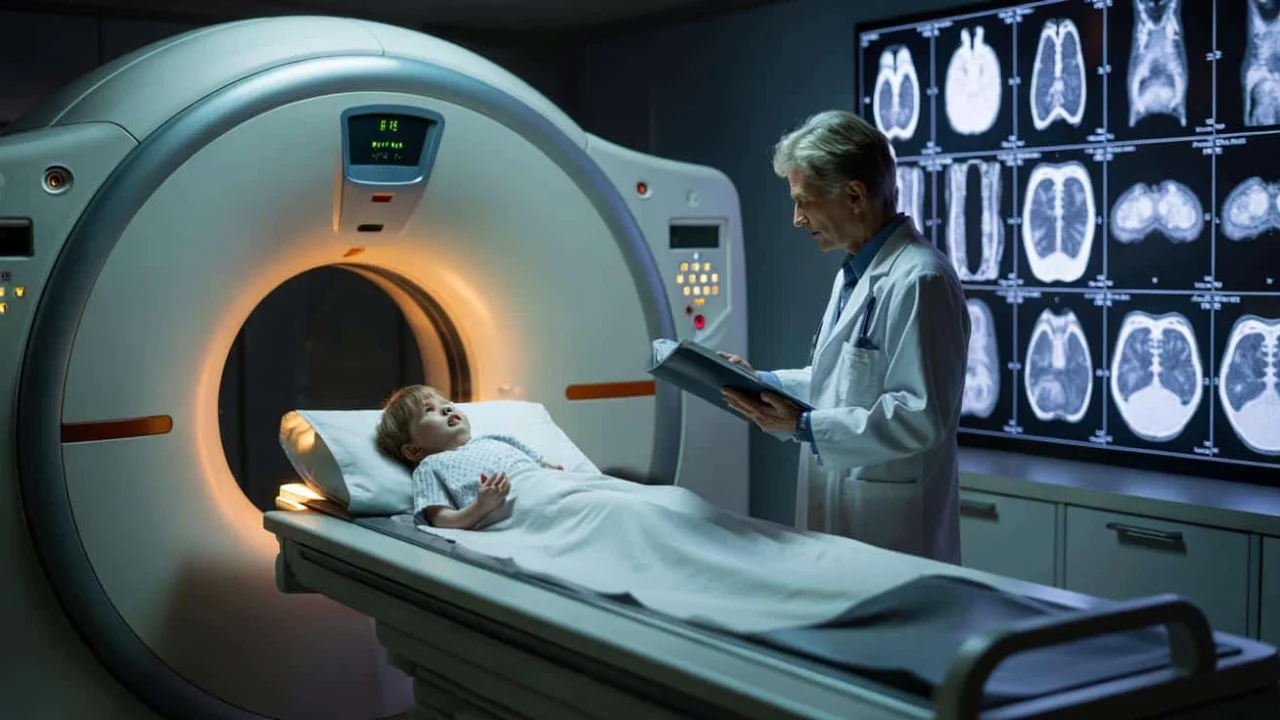
Sarah Martinez was 34 when her doctor recommended a CT scan after she complained of persistent stomach pain. “It’ll give us a clear picture of what’s happening inside,” the physician assured her. Within an hour, she had her answer: nothing serious, just some inflammation that would clear up with medication. Sarah felt relieved walking out of the hospital, never thinking twice about the radiation dose she’d just received.
Three months later, her teenage son needed a head scan after a sports injury. Six months after that, her husband got chest imaging for a persistent cough. Like millions of American families, the Martinez household had become regular users of CT technology without anyone keeping track of their cumulative exposure.
Now, a groundbreaking study published in JAMA Internal Medicine suggests families like Sarah’s might want to start paying closer attention. The research reveals that our growing reliance on CT scans could trigger 103,000 additional cancer cases over patients’ lifetimes – a number that’s forcing doctors and patients to confront an uncomfortable question about modern medicine’s most powerful diagnostic tool.
The Shocking Numbers Behind CT Scan Cancer Risk
The scale of CT scanning in America is staggering. In 2023 alone, hospitals and clinics performed 93 million CT scans on approximately 62 million people. That means many patients received multiple scans, often without anyone tracking their total radiation exposure across different facilities or over time.
Researchers analyzed this massive dataset and modeled what current scanning practices might mean for long-term health outcomes. Their findings paint a sobering picture of unintended consequences from a technology that’s revolutionized medical diagnosis.
“We’re looking at a potential public health issue that’s been hiding in plain sight,” explains Dr. Rebecca Chen, a radiologist who wasn’t involved in the study. “Every scan helps doctors make better decisions, but we’re just starting to understand the cumulative cost.”
The study projects that if current CT scanning practices continue unchanged, radiation-related cancers could eventually account for up to 5% of all new cancer diagnoses annually. This isn’t a prediction for next year, but rather a long-term estimate based on lifetime exposure patterns across the entire population.
Which Cancers Are We Talking About?
The CT scan cancer risk isn’t spread evenly across all cancer types. Researchers identified specific cancers most strongly linked to medical radiation exposure:
- Lung cancer – particularly concerning given chest CT frequency
- Colon cancer – linked to abdominal and pelvic imaging
- Leukemia and blood cancers – highly radiation-sensitive tissues
- Bladder cancer – often exposed during pelvic scans
- Breast cancer – especially relevant for chest imaging in women
- Thyroid cancer – particularly vulnerable during neck and chest scans
What makes these projections especially troubling is that these are already among the most common cancers in Western countries. Any additional cases from medical imaging represent a significant public health concern.
| Scan Type | Radiation Dose | Cancer Risk Level |
|---|---|---|
| Head CT | 2-4 mSv | Moderate |
| Chest CT | 5-7 mSv | High |
| Abdominal CT | 10-20 mSv | Very High |
| Pelvic CT | 10-25 mSv | Very High |
Dr. Michael Torres, an emergency physician, puts these numbers in perspective: “A single abdominal CT can deliver the same radiation dose as 200-500 chest X-rays. Most patients have no idea they’re receiving that much exposure.”
Children Face the Highest Stakes
Perhaps the most alarming finding from the research concerns pediatric patients. Children and teenagers face significantly higher long-term cancer risks from CT scans compared to adults, for several biological reasons.
Young tissues divide more rapidly than adult tissues, making them more susceptible to radiation damage. Additionally, children have decades of life ahead of them, providing more time for radiation-induced cancers to develop and manifest.
“A 10-year-old getting a head CT faces roughly three times the cancer risk of a 40-year-old receiving the same scan,” notes Dr. Lisa Park, a pediatric radiologist. “We need to be especially careful about imaging decisions in young patients.”
The study found that head scans pose particular concerns for children, partly due to the sensitivity of developing brain tissue and surrounding structures. For adult patients, abdominal, pelvic, and chest imaging showed the strongest associations with future cancer risk.
Emergency departments face especially difficult decisions. When a child arrives after a head injury, doctors must weigh the immediate need for diagnostic information against potential long-term consequences. These split-second decisions affect thousands of families every day.
What This Means for Patients Right Now
The research doesn’t suggest that people should avoid necessary CT scans. These powerful imaging tools save lives by catching strokes, detecting internal injuries, and identifying cancers in their early, treatable stages. The key word is “necessary.”
Medical experts are calling for more careful consideration of when CT scans are truly needed versus when alternative imaging methods might suffice. Ultrasound and MRI scans, while not perfect substitutes for every situation, deliver no ionizing radiation.
“We need to move from ‘CT for everything’ to ‘CT when it matters most,'” argues Dr. Jennifer Wu, who studies medical imaging safety. “That shift could dramatically reduce population-level exposure without compromising patient care.”
Several practical changes could help reduce CT scan cancer risk:
- Better tracking systems that follow patients’ cumulative radiation exposure across different facilities
- Stricter guidelines for when CT scans are appropriate versus alternative imaging
- Improved technology that delivers the same diagnostic quality with lower radiation doses
- Patient education so people can make informed decisions about their imaging choices
Some hospitals are already implementing “radiation passports” that track each patient’s lifetime exposure. Others are investing in newer CT machines that can deliver high-quality images with significantly lower radiation doses.
The Balancing Act Between Benefit and Risk
The challenge facing modern medicine is striking the right balance between diagnostic power and long-term safety. CT scans undoubtedly save lives by enabling rapid, accurate diagnosis of serious conditions. The question is whether we’re using this powerful tool more often than necessary.
Emergency physicians report feeling pressure to order imaging studies to avoid missing rare but serious conditions. Malpractice concerns, patient expectations, and the speed of emergency care all contribute to higher CT utilization rates.
“Nobody wants to be the doctor who missed a stroke or didn’t catch internal bleeding,” explains Dr. Torres. “But we also can’t ignore the cumulative effect of all this radiation exposure on population health.”
The 103,000 additional cancers projected by the study represent statistical models, not certainties. However, the researchers used conservative assumptions, suggesting the actual impact could be even higher if current trends continue.
Moving forward, the medical community faces difficult decisions about how to preserve the diagnostic benefits of CT scanning while minimizing long-term cancer risks. The answer likely involves better technology, smarter guidelines, and more informed conversations between doctors and patients about the true costs and benefits of medical imaging.
FAQs
How much radiation do I get from a single CT scan?
It depends on the type of scan, but ranges from 2-25 mSv, equivalent to several months or years of natural background radiation exposure.
Should I refuse a CT scan my doctor recommends?
No, but you should ask if alternative imaging methods like ultrasound or MRI could provide the same information without radiation exposure.
Do hospitals track how much radiation I’ve received over time?
Most don’t currently track cumulative exposure across different facilities, though some are beginning to implement tracking systems.
Are children really at higher risk from CT scans?
Yes, children face roughly 2-3 times higher cancer risk from the same radiation dose due to their rapidly dividing tissues and longer life expectancy.
How can I find out my total radiation exposure from medical imaging?
Ask each facility to provide radiation dose reports for your scans, though this information isn’t always easily available or standardized.
Are newer CT machines safer than older ones?
Yes, modern CT scanners can often provide the same image quality with 40-60% less radiation than machines from a decade ago.

Related Posts