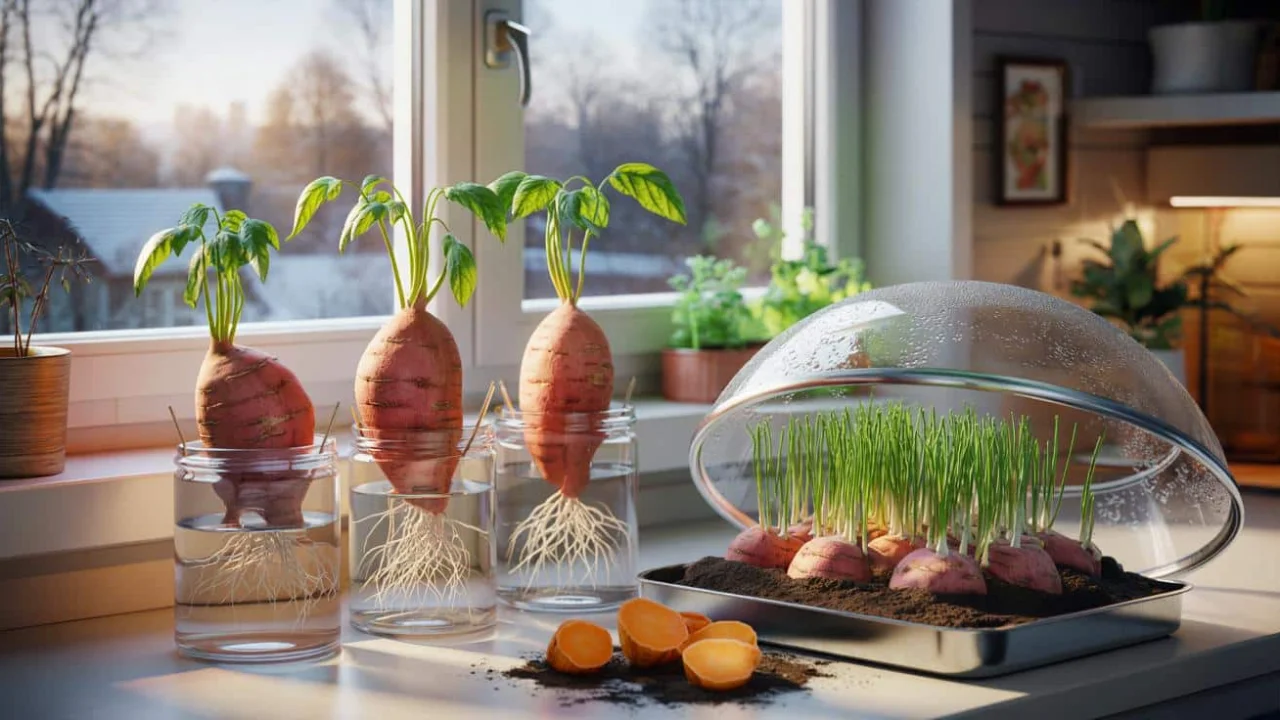
Sarah stared at the grocery bag on her kitchen counter, questioning her December purchase. Three organic sweet potatoes sat there, looking ordinary enough. Her neighbors probably thought she was crazy for buying vegetables to plant when snow covered everything outside. But Sarah had a secret weapon against the short growing season that had frustrated her for years.
Last spring, she’d planted sweet potato slips in May, only to watch them struggle through a cool summer before finally producing a handful of small tubers. This year would be different. This year, she was getting ahead of the game.
While most gardeners dream of spring catalogs and wait for warmer weather, Sarah was about to start sweet potato sprouting in the dead of winter. It’s a technique that’s quietly spreading among home gardeners who refuse to let short seasons limit their harvest.
Why Winter Sweet Potato Sprouting Changes Everything
Sweet potato sprouting during winter isn’t just possible—it’s brilliant strategy. These tropical plants need every advantage they can get in cooler climates, where the frost-free growing season might only last five to six months.
Sweet potatoes don’t grow from seeds like most vegetables. Instead, they’re propagated from “slips”—those leafy shoots that emerge from the tuber when conditions are right. The process takes time, often 6-10 weeks from start to finish.
“Starting slips indoors in January or February gives you incredibly strong plants ready to explode into growth the moment you can safely plant outside,” explains master gardener Jim Patterson, who’s been perfecting winter sprouting techniques for over a decade.
The timing works perfectly. While your neighbors are still planning their gardens, you’ll have robust plants with established root systems waiting in the wings.
The Complete Sweet Potato Sprouting Method
Getting started with sweet potato sprouting requires just a few basic supplies and some patience. The process is surprisingly forgiving, making it perfect for both beginners and experienced gardeners.
Essential Supplies and Setup
- Healthy, organic sweet potatoes (avoid treated supermarket varieties when possible)
- Sharp, clean knife
- Glass jars or clear containers
- Toothpicks
- Warm water
- Small pots with potting soil
- Heat mat or warm location (70-80°F ideal)
| Week | Activity | What to Expect |
|---|---|---|
| 1-2 | Initial setup and sprouting | Small shoots begin emerging |
| 3-4 | Monitor and maintain | Slips develop leaves |
| 5-6 | Separate and root slips | Individual plants form |
| 7-8 | Harden off plants | Ready for outdoor planting |
The Step-by-Step Process
Start by cutting your sweet potato in half lengthwise. Each half can produce multiple slips, so one medium potato often yields 8-12 plants.
Insert toothpicks around the middle of each half and suspend it cut-side down in a jar filled with water. The bottom inch should be submerged, with the top staying dry to prevent rot.
Place your jars in a warm spot—on top of the refrigerator, near a heating vent, or on a seed starting heat mat. Consistency matters more than exact temperature.
“The magic happens when you maintain that steady warmth,” notes urban farming consultant Maria Rodriguez. “Cold nights and warm days will slow everything down.”
When Things Go Wrong and How to Fix Them
Sweet potato sprouting isn’t foolproof, but most problems have simple solutions. Understanding what can go wrong helps you troubleshoot before losing weeks of progress.
If your tubers develop soft spots or smell funky, they’re rotting. Remove them immediately and start fresh with new potatoes. Sometimes only part of the tuber goes bad—you can often cut away the damaged section and continue.
No sprouts after three weeks usually means the tubers were treated with growth inhibitors. Grocery store sweet potatoes are often treated to prevent exactly what you’re trying to achieve. Organic varieties or tubers from farmers markets typically perform better.
Weak, spindly slips indicate insufficient light or warmth. Move your setup closer to a bright window or add a grow light. Once slips reach 4-6 inches tall with several leaves, they’re ready to separate.
Separating and Rooting Your Slips
Gently twist mature slips away from the mother tuber—they should come off with minimal resistance. If they stick, they need more time to develop.
Place separated slips in glasses of water, changing the water every few days. Roots typically appear within a week. Once roots reach an inch long, plant them in small pots filled with quality potting mix.
“Each slip becomes an individual plant that can produce 3-5 pounds of sweet potatoes by fall,” explains Patterson. “That’s why starting early makes such a difference.”
Planning Your Spring Planting Strategy
By March or April, depending on your location, you’ll have strong sweet potato plants ready to transplant. The key is timing this transition with your local frost dates and soil temperature.
Sweet potatoes need soil temperatures consistently above 60°F, preferably closer to 65-70°F. Planting too early in cool soil stunts growth and makes plants vulnerable to problems.
Start hardening off your plants about two weeks before planned transplanting. Gradually expose them to outdoor conditions, starting with just an hour or two of filtered sunlight and building up to full day exposure.
Maximizing Your Harvest Potential
Winter-started slips often outperform spring-planted ones by 30-50% in total yield. The extra growing time translates directly into larger, more numerous tubers.
Plant your slips 12-15 inches apart in loose, well-draining soil. Sweet potatoes spread underground, so they need room to develop their storage roots without competing with neighbors.
“The difference between winter-started plants and spring slips is dramatic,” Rodriguez observes. “By August, the winter plants are already forming tubers while spring ones are just getting established.”
FAQs
How long does sweet potato sprouting take?
The complete process takes 6-10 weeks from starting the tuber to having transplant-ready slips.
Can I use sweet potatoes from the grocery store?
Yes, but organic varieties work best since they’re less likely to be treated with sprouting inhibitors.
What temperature is best for sprouting?
Maintain consistent warmth between 70-80°F for fastest sprouting and healthiest plants.
How many plants can I get from one sweet potato?
A medium sweet potato typically produces 8-15 slips, each becoming an individual plant.
When should I start the sprouting process?
Begin in January or February to have strong plants ready for late spring planting after frost danger passes.
Do I need special equipment?
Basic supplies like jars, toothpicks, and a warm location are sufficient—no expensive equipment required.

Related Posts