Sarah stared at the growing pile of invoices on her kitchen table. Gas bills had doubled since last winter, and the heating oil estimate for this season made her stomach drop. “There has to be another way,” she muttered, glancing at the old fireplace she’d barely used since moving in three years ago.
Like thousands of homeowners across the country, Sarah is rediscovering wood heating as energy costs spiral upward. But her first question stopped her cold: how much firewood would she actually need to heat her 100-square-meter home through winter?
The answer isn’t as simple as you might think. Getting your firewood heating needs right could mean the difference between cozy evenings and emergency trips to buy overpriced logs in January.
Why Your Neighbor Burns Twice as Much Wood as You
Walk down any street with wood-heated homes, and you’ll spot the telltale signs. Some houses have modest woodpiles that seem to last forever. Others burn through mountain-sized stacks before spring arrives.
This isn’t about being wasteful or frugal. Two identical 100-square-meter homes can have completely different firewood heating needs. The difference often doubles or even triples based on factors most people never consider.
“I see homeowners shocked when their wood consumption doesn’t match their neighbor’s,” says Mark Thompson, a certified chimney sweep with 15 years of experience. “They assume something’s wrong with their stove, but usually it’s just different circumstances.”
Your firewood heating needs depend on several key variables:
- Home size and layout (80, 100, or 120 square meters)
- Insulation quality and air tightness
- Type and efficiency of your wood-burning appliance
- Local climate conditions and elevation
- Wood species and moisture content
- Your personal comfort preferences and heating schedule
For most reasonably well-insulated homes between 80-120 square meters using wood as the primary heat source, expect to burn between 4 and 10 cubic meters of firewood per winter season.
Breaking Down Your Firewood Heating Needs by Home Size
Here’s where the rubber meets the road. These estimates assume you’re heating your home primarily with wood, not just supplementing another heating system.
| Home Size | Modern Wood Stove (Well Insulated) | Fireplace Insert (Average Insulation) | Open Fireplace (Poor Insulation) |
|---|---|---|---|
| 80 m² | 3-4 cubic meters | 4-6 cubic meters | 8-12 cubic meters |
| 100 m² | 4-6 cubic meters | 6-8 cubic meters | 10-15 cubic meters |
| 120 m² | 5-7 cubic meters | 7-9 cubic meters | 12-18 cubic meters |
Modern wood stoves shine here. Their advanced combustion systems squeeze every bit of heat from your logs. “A good EPA-certified stove can be 70-80% efficient,” explains heating contractor Lisa Rodriguez. “Compare that to maybe 15% efficiency from an open fireplace.”
If your home falls into the “moderately insulated” category, add 1-2 cubic meters to the modern stove estimates. Poor insulation? You’re looking at numbers closer to the fireplace insert range, regardless of your appliance.
Climate plays a huge role too. Northern regions or high-altitude locations can push your firewood heating needs up by 20-30%. A harsh winter in Minnesota demands more fuel than a mild season in Virginia.
What Actually Drives Your Wood Consumption
Understanding these factors helps you plan better and avoid nasty surprises when the thermometer drops.
Your Heating Appliance Makes or Breaks Your Budget
The gap between appliance types is staggering. An open fireplace might devour 15 cubic meters where a modern stove uses just 5. That’s not just about efficiency – it’s about how much heat actually stays in your room versus disappearing up the chimney.
Fireplace inserts occupy the middle ground. They’re better than open fires but can’t match the controlled combustion of a dedicated wood stove.
Insulation: Your Silent Money Saver
Good insulation doesn’t just reduce your firewood heating needs – it transforms them. A well-insulated home might use 40% less wood than a drafty one of the same size.
“I always tell customers to audit their insulation before upgrading their stove,” notes energy consultant David Park. “Sealing air leaks and adding insulation often cuts wood consumption more than buying expensive equipment.”
Wood Quality Changes Everything
Wet wood is expensive wood, even when it costs the same per cubic meter. Properly seasoned hardwood (below 20% moisture) burns hotter and longer than green or softwood alternatives.
Seasoned oak or maple delivers roughly twice the heat of freshly cut pine. Your firewood heating needs calculation should account for what you’re actually burning, not just the volume you’re stacking.
Planning Your Winter Wood Supply
Smart planning starts with honest assessment. Walk through your home and note obvious heat loss areas – drafty windows, uninsulated walls, gaps around doors.
Consider your heating habits too. Do you heat the whole house to 22°C all day, or just warm the living areas during evening hours? Your lifestyle directly impacts your firewood heating needs.
Most experts recommend ordering 10-20% extra wood for your first season. “Better to have leftover wood than run short in February,” advises Thompson. “Good firewood only improves with proper storage.”
Start shopping for next winter’s supply in spring when prices are lowest and selection is best. Freshly cut wood needs 6-12 months to properly season, depending on species and storage conditions.
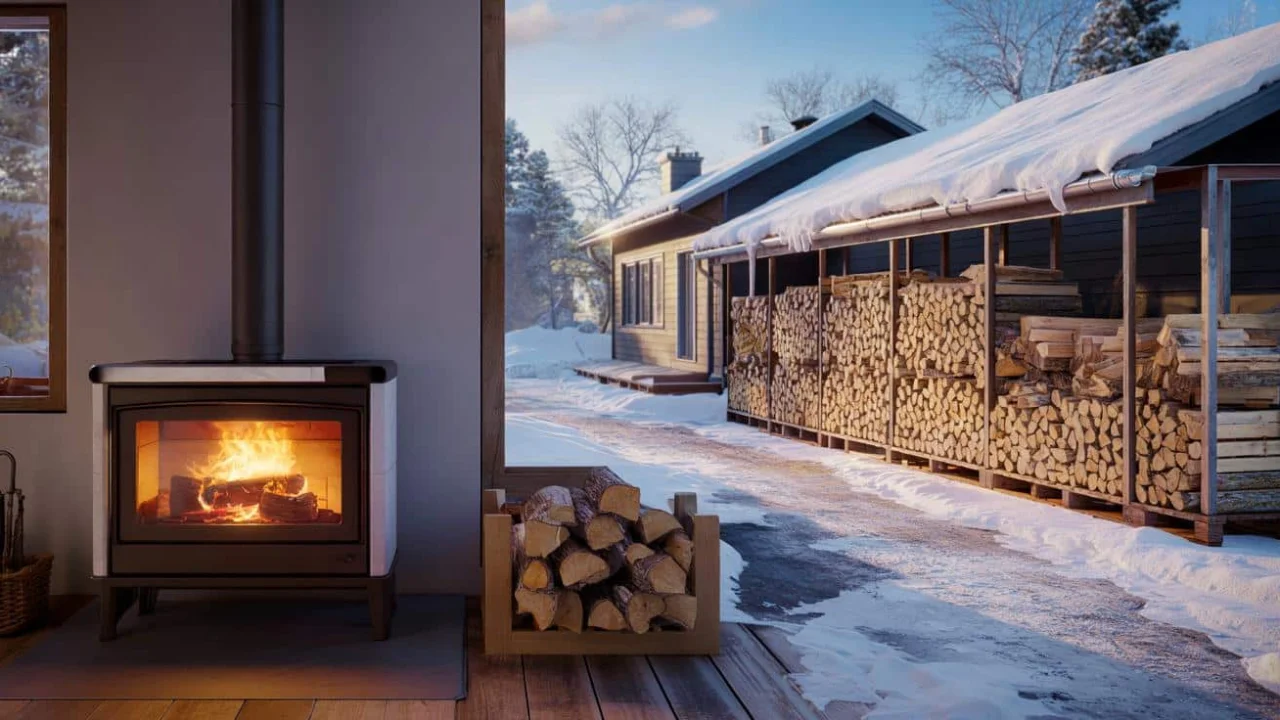
Storage matters as much as quantity. Keep your wood pile off the ground, covered on top, but with sides open for airflow. Proper storage prevents rot and maintains the BTU content you paid for.
FAQs
How do I know if my wood is properly seasoned?
Well-seasoned wood sounds hollow when two pieces are knocked together and has visible cracks on the ends. A moisture meter reading below 20% confirms it’s ready to burn.
Should I buy wood by weight or volume?
Always buy by volume (cubic meters or cords). Wood weight varies dramatically by species and moisture content, making price comparisons impossible.
Can I reduce my firewood needs with a heat pump backup?
Absolutely. Many homeowners use wood as primary heat with a heat pump for extremely cold days or when they’re away. This hybrid approach can cut wood consumption by 30-40%.
What’s the best wood species for heating efficiency?
Dense hardwoods like oak, maple, and ash provide the most heat per cubic meter. They burn longer and hotter than softwoods like pine or fir.
How much storage space do I need for a winter’s supply?
Plan for about 2-3 square meters of storage space per cubic meter of stacked wood. Include room for air circulation and protection from direct rain.
Is it worth upgrading from a fireplace insert to a modern stove?
If you’re using wood as your primary heat source, the efficiency gains often pay for themselves within 2-3 seasons through reduced wood consumption.

Related Posts