Sarah stared out at her backyard last February, watching snow melt into muddy puddles where she dreamed of growing tomatoes. Her neighbor Mike was already out there with a rototiller, fighting the soggy clay soil like it owed him money. The noise was deafening, his back was clearly aching, and honestly, the whole scene looked miserable.
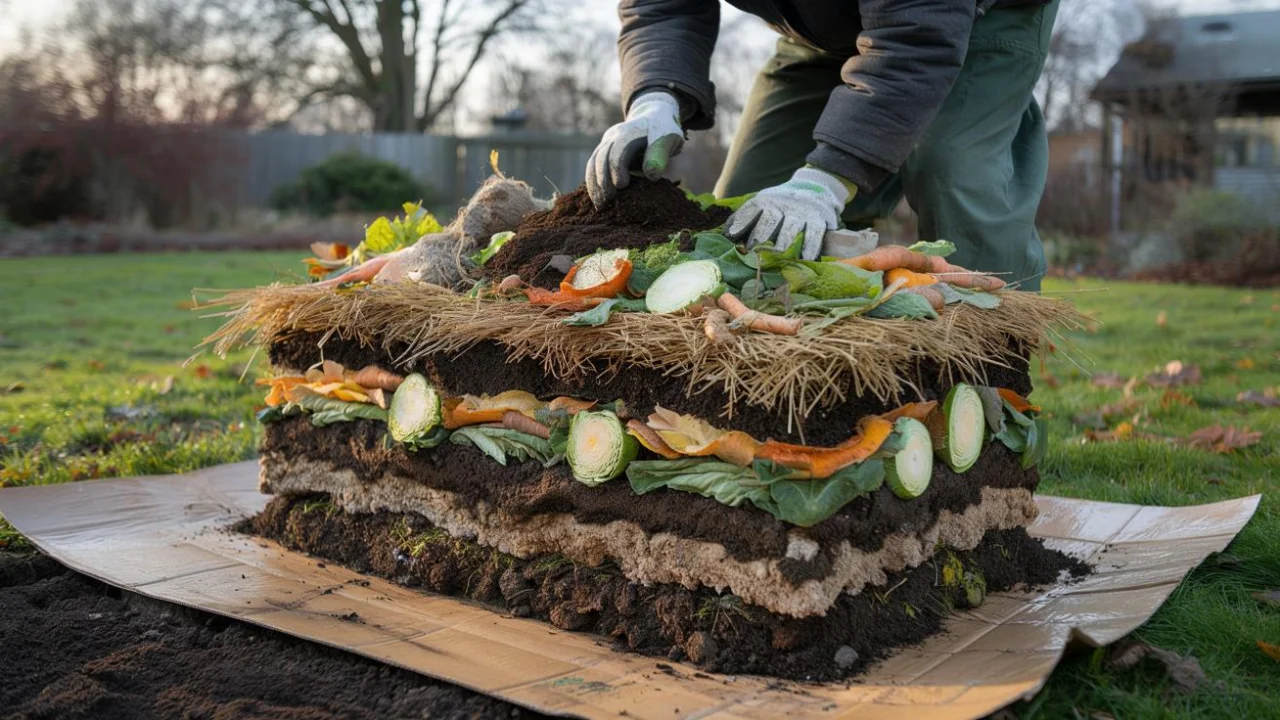
Meanwhile, Sarah had spent the winter quietly stacking kitchen scraps, cardboard, and fallen leaves in neat piles where her garden beds would be. No digging. No machine rental. No weekend spent recovering from manual labor. By the time Mike finished wrestling with his soil, Sarah’s “lasagna layers” had transformed into the richest, fluffiest growing medium either of them had ever seen.
That’s the magic of lasagna gardening – a soil-building technique that most gardeners have never heard of, despite being one of the most effective ways to create fertile ground without breaking your back or your budget.
The Secret Behind This No-Dig Wonder Method
Lasagna gardening has nothing to do with Italian cuisine, though the layering concept is borrowed from that famous pasta dish. This is a no-till method where you stack organic materials directly on top of existing soil, creating a decomposing “sandwich” that feeds itself.
“Think of it as composting in place, right where you want to grow your vegetables,” explains Patricia Lanza, who popularized the technique. “You’re essentially creating a lasagna of organic matter that breaks down into perfect soil.”
The process mimics what happens naturally on forest floors. Leaves fall, branches drop, animals leave droppings, and everything slowly decomposes into rich humus. Lasagna gardening accelerates this natural process and concentrates it exactly where you need fertile soil.
Instead of fighting compacted clay or sandy soil with tools and amendments, you’re building a completely new growing medium on top. The layers suppress weeds, retain moisture, and create a paradise for beneficial microorganisms and earthworms.
How to Build Your Winter Soil Factory
The beauty of lasagna gardening lies in its simplicity. You alternate between “brown” carbon-rich materials and “green” nitrogen-rich materials, just like building a compost pile.
Here’s what goes into each layer:
| Brown Materials (Carbon) | Green Materials (Nitrogen) |
|---|---|
| Cardboard or newspaper | Kitchen scraps (no meat/dairy) |
| Dried leaves | Fresh grass clippings |
| Straw or hay | Coffee grounds |
| Shredded paper | Chicken manure |
| Wood chips | Seaweed or kelp |
Start with cardboard as your base layer – this suppresses weeds and eventually breaks down. Then alternate roughly 3 parts brown to 1 part green materials. Each layer should be 2-4 inches thick.
“I tell people to think of it like making a giant outdoor sandwich,” says master gardener Tom Richardson. “The cardboard is your bread, and you’re layering ingredients that will feed soil organisms all winter long.”
The ideal lasagna bed should be 18-24 inches tall when you first build it. Don’t worry – it will shrink dramatically as materials decompose and settle.
Why Winter Timing Makes All the Difference
Most gardeners think winter is downtime, but it’s actually prime soil-building season. Those cold, wet months are exactly what your lasagna layers need to transform into garden gold.
Moisture from rain and snow penetrates the layers, kick-starting decomposition. Freezing and thawing breaks down tough materials like cardboard and woody stems. Beneficial bacteria and fungi move in to start the breakdown process, even in cold weather.
Starting in January or February gives you a perfect timeline:
- January-February: Build your lasagna layers
- March-April: Layers settle and begin decomposing
- May: Ready to plant directly into rich, soft soil
- Summer: Continued decomposition feeds your plants all season
“By the time spring planting season arrives, what looked like a pile of garbage has transformed into the most beautiful, fertile soil you’ve ever seen,” notes sustainable agriculture expert Dr. Maria Santos. “Your neighbors will be amazed.”
The winter prep also solves the problem of what to do with organic waste. Kitchen scraps, pruned branches, and bagged leaves that might otherwise head to landfills become the foundation of your future garden.
Real Results That Transform Gardens and Gardeners
The impact of lasagna gardening goes far beyond soil improvement. Gardeners report dramatic changes in their growing success and physical comfort.
Water retention improves significantly – lasagna beds hold moisture like a sponge, reducing watering needs by up to 50%. The organic matter creates air pockets that prevent waterlogging while storing water for dry periods.
Weed suppression is another major benefit. The initial cardboard layer blocks existing weeds, while the thick mulch layers prevent new weed seeds from germinating. Many gardeners report spending 75% less time weeding.
Physical strain disappears almost entirely. No digging, no tilling, no hauling heavy bags of soil amendments. You’re literally building soil from materials that would otherwise be thrown away.
“I used to dread spring garden prep because of my back problems,” shares longtime gardener Janet Miller. “Now I actually look forward to it. I just pull back the mulch and plant directly into soft, crumbly soil.”
The financial savings add up quickly too. A typical lasagna bed costs almost nothing to create, using free materials like cardboard from appliance stores, leaves from neighbors, and kitchen scraps you’re already producing.
Perhaps most importantly, this method creates a sustainable cycle. Each season, you add new layers on top, and the bottom continues decomposing into richer soil. After 2-3 years, you’ll have the deepest, most fertile growing medium possible.
The technique works in any climate and adapts to different garden sizes. Urban gardeners build lasagna beds in raised containers. Suburban gardeners convert entire lawns. Rural gardeners create massive food production areas without machinery.
FAQs
How long does it take for lasagna garden layers to decompose?
Most materials break down enough for planting within 3-4 months, though full decomposition takes 6-12 months depending on climate and materials used.
Can I plant directly into a new lasagna bed?
Yes, but it’s easier to wait until materials have settled and softened. If planting immediately, create pockets of finished compost or potting soil for seeds and transplants.
What happens if my lasagna bed attracts pests?
Avoid meat, dairy, and oily foods in your layers. Cover fresh kitchen scraps with brown materials, and consider using hardware cloth underneath if rodents are a serious concern.
How thick should each layer be?
Aim for 2-4 inches per layer, with brown materials slightly thicker than green materials. The total bed should start around 18-24 inches tall.
Do I need to turn or mix the layers?
No – that’s the beauty of lasagna gardening. Let nature do the work. Soil organisms, worms, and weather will mix and break down materials naturally.
Can I use this method in containers or raised beds?
Absolutely. Lasagna gardening works perfectly in raised beds and large containers. Just adjust layer thickness based on your container depth.

Related Posts