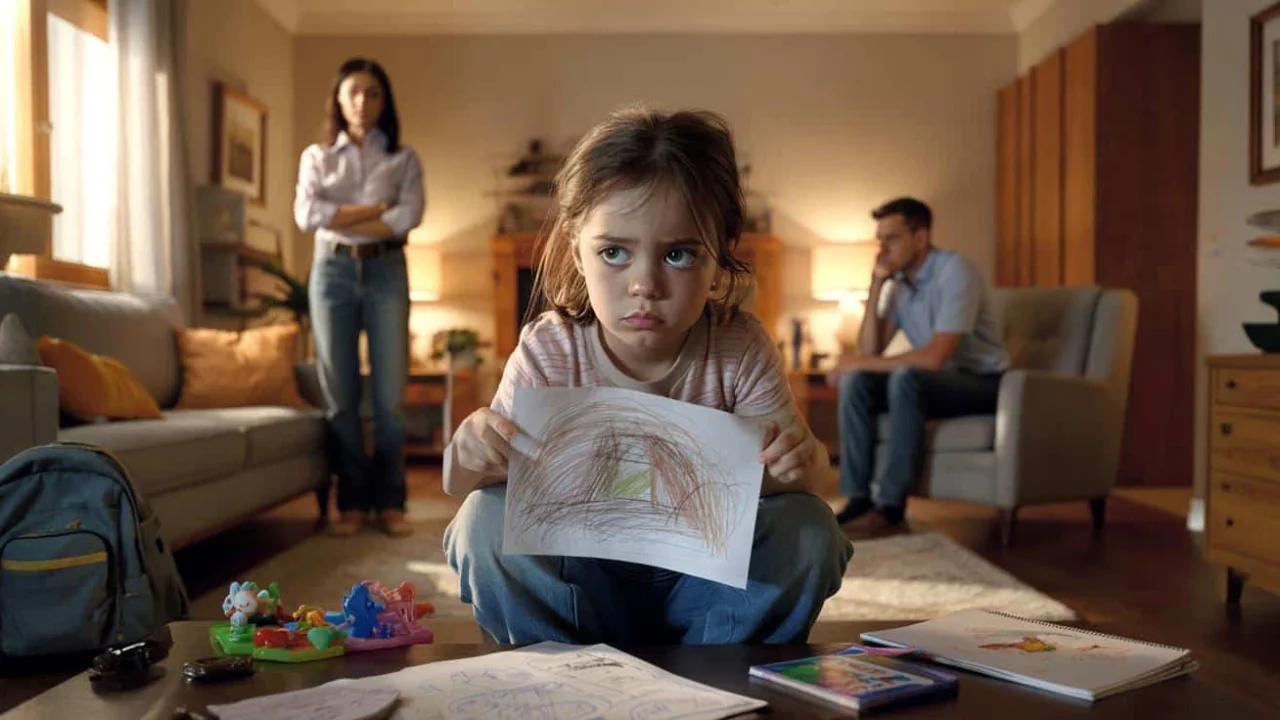
Sarah noticed her 7-year-old daughter Emma had stopped sharing stories about her day at school. What used to be animated chatter over dinner had turned into polite, one-word answers. “Fine,” Emma would say when asked about her day. “Okay,” when asked about her friends.
It wasn’t until Sarah overheard Emma talking to her stuffed animals that she realized what was happening. “You can’t be sad about that,” Emma told her teddy bear in a stern voice that sounded eerily familiar. “Big girls don’t cry over stupid things.”
Sarah’s heart sank. She recognized her own words coming back to her, the very phrases she thought were helping Emma “toughen up” for the real world. Instead, they had taught her daughter that her feelings weren’t welcome in their home.
This moment of painful recognition led Sarah to question everything she thought she knew about effective parenting. Like millions of parents worldwide, she had unknowingly adopted attitudes that psychology research now shows can significantly impact children’s emotional development and long-term happiness.
How Everyday Parenting Attitudes Shape Children’s Happiness
Most parents love their children deeply and want nothing more than to raise happy, confident kids. Yet psychology research reveals that some of the most common parenting attitudes—ones that seem harmless or even helpful—can gradually erode a child’s emotional well-being.
These aren’t the obvious red flags of abuse or neglect. They’re subtle patterns that millions of well-meaning parents fall into, often repeating what they experienced in their own childhoods. The damage accumulates slowly, like water wearing away stone, creating invisible wounds that can persist well into adulthood.
The science behind these patterns is compelling. Longitudinal studies following children from early childhood into their adult years consistently show that certain parental attitudes predict higher rates of anxiety, depression, and relationship difficulties decades later. The most troubling aspect? Many of these harmful patterns are considered “normal” or even praised in our achievement-oriented culture.
“Children are incredibly sensitive to emotional atmosphere,” explains child psychologist Dr. Maria Chen. “They pick up on attitudes and energy long before they understand words. A parent’s consistent emotional responses become the child’s internal compass for self-worth.”
This internal compass, formed in the earliest years of life, influences everything from academic performance to romantic relationships. Children who grow up feeling chronically criticized, dismissed, or conditionally loved often carry these wounds into their adult lives, perpetuating cycles of emotional pain across generations.
Nine Parenting Attitudes That Psychology Links to Childhood Unhappiness
Research has identified specific parenting attitudes that correlate strongly with anxiety, depression, and low self-esteem in children. Understanding these patterns is the first step toward breaking them:
| Harmful Attitude | What It Looks Like | Impact on Child |
|---|---|---|
| Constant Criticism | “You could have done better” as default response | Perfectionism, self-doubt, fear of trying |
| Emotional Invalidation | “You’re overreacting,” “Don’t be so sensitive” | Disconnection from feelings, shame about emotions |
| Conditional Love | Affection depends on performance or behavior | Anxiety about worthiness, people-pleasing |
| Overprotection | Preventing age-appropriate challenges or failures | Low confidence, fear of independence |
| Emotional Unavailability | Distracted, dismissive, or overwhelmed responses | Difficulty forming secure relationships |
The remaining attitudes include comparison with others, inconsistent boundaries, using children as emotional support, and prioritizing achievement over character. Each creates its own pattern of emotional damage that can persist for years.
- Comparison Culture: Constantly measuring children against siblings, classmates, or idealized standards teaches them their worth is relative and conditional
- Boundary Chaos: Rules that change based on parent’s mood or convenience create anxiety and confusion about expectations
- Role Reversal: Using children as confidants or emotional caretakers burdens them with inappropriate responsibility
- Achievement Obsession: Valuing accomplishments over kindness, effort, or character sends the message that love must be earned
Each of these attitudes operates like a slow-acting poison in the parent-child relationship. Take constant criticism, for example. Parents often believe they’re helping their children improve by pointing out flaws and mistakes. However, research from developmental psychology shows that children who receive predominantly critical feedback develop what psychologists call “learned helplessness”—they stop trying because they believe failure is inevitable.
Similarly, emotional invalidation—dismissing or minimizing a child’s feelings—teaches children that their inner experience is wrong or unimportant. This creates adults who struggle to trust their own emotions and intuition, leading to difficulties in relationships and decision-making throughout life.
“The most damaging parenting attitudes often come from our own unresolved childhood wounds,” notes family therapist Dr. James Rodriguez. “We unconsciously repeat patterns, even when we swore we’d do things differently. Breaking these cycles requires conscious effort and often professional support.”
The Science Behind Harmful Parenting Patterns
Neuroscience research provides compelling evidence for why certain parenting attitudes have such lasting effects. During childhood, the brain is rapidly developing neural pathways that will influence emotional regulation, self-concept, and stress response for life. When children consistently experience criticism, rejection, or emotional invalidation, their brains adapt by becoming hypervigilant to threat and developing negative self-concepts.
Brain imaging studies show that adults who experienced emotionally harmful parenting attitudes as children have different patterns of brain activation when processing emotions and social interactions. The amygdala, responsible for fear responses, tends to be overactive, while areas associated with self-compassion and emotional regulation show reduced activity.
However, the same neuroplasticity that allows harmful patterns to take root also makes healing possible. When children experience consistent emotional safety, validation, and unconditional acceptance, their brains can develop healthier neural pathways even after early damage has occurred.
The Real-World Impact on Children and Families
These harmful parenting attitudes don’t just affect childhood—they shape adult relationships, career choices, and mental health for decades. Children who grow up with constant criticism often become adults who struggle with imposter syndrome, believing they’re frauds who don’t deserve their successes. Those who experienced emotional invalidation may have trouble identifying their own needs or setting boundaries in relationships.
The workplace impact is significant. Adults raised with conditional love often become chronic people-pleasers, unable to say no or advocate for themselves. They may excel professionally while feeling empty inside, constantly seeking external validation they never received at home. Meanwhile, children who were overprotected often struggle with decision-making and risk-taking in their careers, missing opportunities due to deep-seated fears of failure.
The effects ripple through families and communities. Kids who feel chronically misunderstood at home often seek validation in unhealthy ways—through perfectionism, people-pleasing, or risky behaviors. They may struggle to form secure attachments in their own relationships, continuing cycles of emotional dysfunction.
In romantic relationships, adults who experienced harmful parenting attitudes often find themselves attracted to partners who recreate familiar dynamics. Those raised by critical parents may choose critical partners, while those who experienced emotional unavailability may struggle with intimacy or choose emotionally unavailable partners.
However, awareness creates the possibility for change. Parents who recognize these patterns can begin shifting toward more supportive approaches. Children are remarkably resilient when they feel truly seen and accepted for who they are, not just for what they accomplish or how well they behave.
“One of the most healing things a parent can do is acknowledge when they’ve made mistakes,” explains child development expert Dr. Lisa Park. “Children don’t need perfect parents—they need authentic ones who can repair ruptures in the relationship and model how to handle imperfection with grace.”
The goal isn’t to eliminate all challenges from children’s lives or praise everything they do. Healthy parenting involves setting boundaries, having expectations, and allowing kids to experience age-appropriate difficulties. The key difference lies in the underlying attitude—whether children feel fundamentally accepted and supported, even when they’re struggling or making mistakes.
Small shifts in parenting attitudes can create profound changes in family dynamics. Instead of “You’re so clumsy,” try “Accidents happen—let’s clean this up together.” Rather than “Don’t cry,” offer “I see you’re really upset. Tell me what happened.” These seemingly minor adjustments communicate respect for the child’s experience and inherent worth.
The transformation isn’t always immediate, especially if harmful patterns have been in place for years. Children who have learned to hide their emotions or walk on eggshells around parents may initially be skeptical of change. Consistency and patience are essential as families work to rebuild trust and create new, healthier patterns of interaction.
Research shows that even small improvements in parental emotional responsiveness can significantly impact children’s well-being. A study published in the Journal of Family Psychology found that when parents increased their use of validating responses by just 20%, their children showed measurable improvements in emotional regulation and self-esteem within three months.
Creating Lasting Change in Family Dynamics
Transforming harmful parenting attitudes requires more than just changing words—it demands a fundamental shift in how parents view their role and their children. This process often involves parents doing their own emotional work, examining their childhood experiences, and learning to regulate their own emotions before they can effectively support their children’s emotional development.
Many parents benefit from professional support during this transition. Family therapy can provide tools for communication, help parents process their own childhood experiences, and create safe spaces for family members to express their feelings and needs. Support groups for parents can also provide validation and practical strategies for implementing positive changes.
The investment in changing these patterns pays dividends across generations. Children who grow up feeling emotionally safe and valued are more likely to become emotionally healthy adults and parents, breaking cycles of dysfunction that may have persisted for generations.
FAQs
Can these parenting attitudes cause lasting damage to children?
Yes, research shows these patterns can impact mental health and relationships well into adulthood, but children are remarkably resilient when patterns change and emotional repair happens within the family.
What if I recognize these attitudes in my own parenting?
Awareness is the first step toward change. Consider working with a family therapist and practice self-compassion as you learn new approaches. Many parents find it helpful to apologize to their children when they recognize past mistakes.
How can I tell if my child is affected by harmful parenting attitudes?
Watch for signs like excessive people-pleasing, perfectionism, difficulty expressing emotions, withdrawal from family interactions, anxiety about making mistakes, or seeming older than their years emotionally.
Is it too late to change if my child is already a teenager?
It’s never too late to improve family relationships. Teens especially appreciate authentic apologies and genuine efforts to change. They’re also old enough to engage in meaningful conversations about family dynamics.
How do I balance setting boundaries with being emotionally supportive?
You can enforce rules while still validating your child’s feelings about those rules. For example: “I understand you’re angry about the curfew, and that makes sense. The rule still stands, but I want to hear how you’re feeling about it.”
What’s the difference between constructive feedback and harmful criticism?
Constructive feedback focuses on specific behaviors, includes encouragement, and maintains respect for the child’s worth. Harmful criticism attacks character, uses absolute language (“you always,” “you never”), and implies the child’s value depends on performance.

Related Posts