Sarah stared at the wilted basil on her kitchen counter, its once-vibrant leaves now black around the edges. She’d bought it just three days ago with grand plans for homemade pesto and caprese salads. Now it looked like something that belonged in the compost bin rather than her dinner.
“This happens every single week,” she muttered, tossing the $3.99 bunch into the trash. The cilantro from last Tuesday had met the same fate, along with half a bag of spinach and some expensive cherry tomatoes that had turned mushy overnight.
Sound familiar? You’re not alone if your fridge feels like a graveyard for good intentions and grocery money. But what if there was a simple food preservation habit that could change everything without buying a single new gadget?
The Simple Habit That Changes Everything
The secret isn’t in expensive vacuum sealers or fancy storage containers. It’s in treating your refrigerator like a humidity control station rather than just a cold storage box.
Every time you put food away, ask yourself one question: “Does this need moisture, air circulation, or protection from humidity?” That thirty-second pause can double or triple the lifespan of your fresh ingredients.
“Most people treat their fridge like a parking garage for food,” says Maria Rodriguez, a culinary instructor who’s taught this technique to hundreds of home cooks. “But when you start thinking about what each ingredient actually needs to stay fresh, everything changes.”
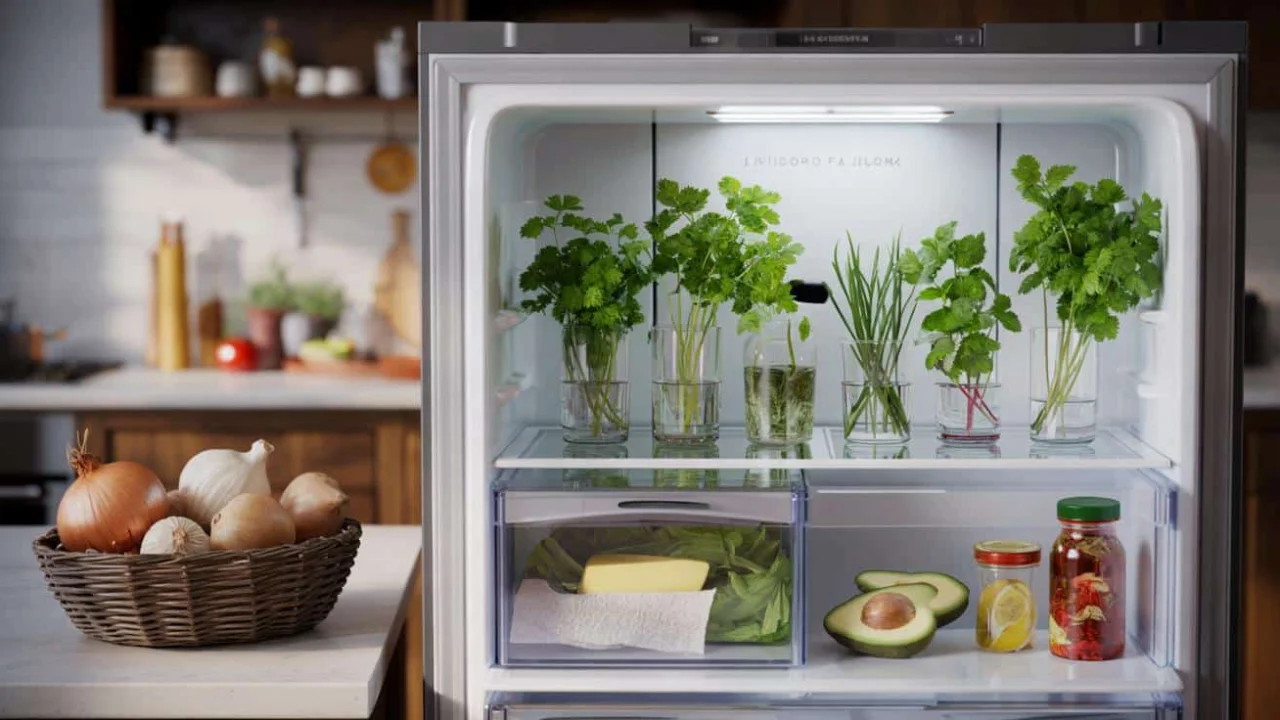
This food preservation method works because different ingredients have vastly different needs. Leafy greens need some moisture but not too much air circulation. Herbs want to drink water like cut flowers. Onions and potatoes prefer dry, ventilated spaces.
How Different Foods Want to Live
Understanding what each ingredient needs is the foundation of better food preservation. Here’s how common ingredients prefer to be stored:
| Food Type | Storage Method | Why It Works |
|---|---|---|
| Fresh herbs (basil, cilantro, parsley) | Stems in water, leaves loosely covered | Mimics natural growing conditions |
| Leafy greens | Wrapped in damp paper towel, then plastic bag | Maintains moisture without creating condensation |
| Berries | Unwashed in breathable container | Prevents moisture buildup that causes mold |
| Cheese | Wrapped in wax paper, then loose plastic | Allows breathing while preventing drying |
| Mushrooms | Paper bag in main fridge compartment | Absorbs excess moisture while allowing air flow |
The key insight here is that most food spoilage happens because of improper moisture levels. Too much moisture creates mold and bacterial growth. Too little causes wilting and dehydration.
“I started treating my herbs like little bouquets, and they went from lasting two days to lasting over a week,” shares Jennifer Chen, a busy parent who discovered this method during lockdown. “My grocery bill dropped by about $40 a month just from throwing away less produce.”
The Paper Towel Game-Changer
One of the most effective food preservation tools you already own is probably sitting in your pantry right now: paper towels.
For leafy greens, the technique is simple but revolutionary. Wash and thoroughly dry your lettuce, spinach, or kale. Wrap it loosely in a slightly damp paper towel, then place it in a plastic bag that’s not completely sealed. The paper towel regulates moisture levels, preventing both wilting and the soggy mess that kills greens fast.
This same principle works for berries, but in reverse. Place a dry paper towel in the bottom of your berry container to absorb excess moisture that would otherwise create the perfect environment for mold.
- Wash berries only right before eating, never before storing
- Remove any damaged berries immediately to prevent spread
- Store in the original breathable container when possible
- Place container on a paper towel in the fridge
“The paper towel trick alone has probably saved me hundreds of dollars over the past year,” notes David Park, a food blogger who tested various preservation methods. “It’s embarrassingly simple, but it works better than any fancy storage system I’ve tried.”
Why This Habit Transforms Your Kitchen
Beyond saving money, this food preservation approach changes how you cook and eat. When ingredients last longer, you’re more likely to experiment with recipes and less likely to default to takeout because “there’s nothing good in the fridge.”
The environmental impact adds up too. Food waste accounts for roughly 8% of global greenhouse gas emissions. Every bunch of herbs or bag of lettuce you save from the trash is a small victory for the planet.
The habit becomes second nature surprisingly quickly. After about two weeks of consciously asking “what does this food need?” you’ll find yourself automatically reaching for the right storage method.
For families, the financial impact can be significant. The average American household throws away about $1,500 worth of food per year. Even cutting that by a third through better food preservation saves $500 annually.
Storage Hacks for Specific Ingredients
Some foods have quirky preferences that aren’t obvious but make a huge difference in longevity:
- Avocados: Store unripe ones with bananas to speed ripening, ripe ones in the fridge to slow it down
- Tomatoes: Never refrigerate unless fully ripe; store stem-side down to prevent air from entering
- Bread: Slice only what you need; store the rest wrapped tightly at room temperature
- Carrots: Remove green tops immediately; they suck moisture from the root
- Potatoes: Store in a cool, dark place with onions nearby (they help each other last longer)
The beauty of this food preservation system is that it adapts to what you already buy and eat. You’re not changing your shopping habits or buying special equipment. You’re just being more intentional about how you store things.
“Once you start paying attention to how different foods behave, it becomes almost like a game,” explains Rodriguez. “You start noticing which techniques work best for your specific fridge and cooking patterns.”
FAQs
How long does it take to see results from better food preservation habits?
You’ll notice ingredients lasting longer within the first week, but the habit becomes automatic after about two weeks of consistent practice.
Do I need to change how I shop for groceries?
Not at all. This method works with whatever you normally buy and uses containers and tools you already have at home.
What’s the biggest mistake people make with food storage?
Assuming all foods want the same treatment. Each ingredient has specific moisture and air circulation needs that most people ignore.
Can this method work in small refrigerators?
Yes, it actually works better in smaller spaces because you’re forced to be more intentional about how you use every inch of storage.
How much money can I realistically save?
Most people report saving $20-50 per month on groceries by throwing away significantly less produce, with larger families seeing even bigger savings.
Is there any food that doesn’t benefit from intentional storage?
Canned and dried goods are already shelf-stable, but even items like crackers and cereal last longer when stored properly in airtight containers.

Related Posts