Last Tuesday morning, I stood in my hallway holding coffee, staring at what could only be described as a shoe graveyard. Sneakers scattered like fallen soldiers, boots standing guard by the door, and somewhere in the chaos, a single sandal I hadn’t seen since summer. To reach my kitchen, I had to navigate like I was playing some bizarre obstacle course.
The house wasn’t dirty exactly. It just felt overwhelmingly busy. Every surface seemed to be carrying something that didn’t belong there, and every corner held the remnants of half-finished tasks. I’d tried the usual approach countless times – big cleaning sessions followed by promises to “keep it this way” – only to watch the chaos creep back within days.
Then something clicked. I stopped looking at my stuff and started looking at my path. That’s when everything changed, and the mess began to shrink.
Your Daily Routes Create Your Clutter Patterns
Most people assume clutter comes from owning too much stuff. While that’s partly true, there’s a sneakier culprit: your house movement patterns. The way you physically move through your home every single day creates invisible highways where items naturally accumulate.
“Your clutter is essentially a map of your daily habits,” explains home organization consultant Maria Rodriguez. “People get frustrated thinking they’re messy, but really their belongings are just following the path of least resistance.”
Think about it. There’s probably a spot where your bag always drops when you come home. A corner where mail mysteriously piles up “for later.” A chair that permanently lives under a mountain of clothes. These aren’t random accidents – they’re the physical footprints of your routines.
I decided to track my own movement patterns like a detective for an entire weekend. The results were eye-opening. I consistently entered the house juggling keys, phone, and a tote bag, which explained why everything immediately landed on the first flat surface inside the door. I’d carry a glass halfway to the kitchen, get distracted by my phone, and abandon it on whatever table was nearby.
Clean laundry made it upstairs but stopped dead on my bed for “sorting” – which somehow translated to sleeping next to a fabric mountain for three nights straight. None of this felt like laziness. It felt like my house and my daily habits were having a constant argument.
The Science Behind Movement and Mess
Once you understand house movement patterns, clutter stops looking random. It follows the exact rhythm of your day: rushed exits, exhausted returns, quick snacks grabbed between video calls. Your belongings aren’t misbehaving – they’re simply landing wherever your energy runs out.
Environmental psychologist Dr. James Chen notes, “We unconsciously create what I call ‘drop zones’ – places where we consistently abandon items when our cognitive load gets too heavy. These zones reveal more about our daily stress patterns than our organizational skills.”
Here’s what different clutter locations typically reveal about your movement patterns:
| Clutter Location | What It Reveals | Movement Pattern |
| Entryway surfaces | Rushed arrivals/departures | Need transition staging area |
| Kitchen counters | High-traffic multitasking zone | Central hub for daily activities |
| Bedroom chair | End-of-day energy depletion | Need closer storage solutions |
| Stair landings | Items waiting for energy to complete journey | Need intermediate stopping points |
The breakthrough moment comes when you stop asking “Why can’t I keep my house tidy?” and start asking “Why does my stuff have to fight my route every time I move?” That mental shift changes everything.
Simple Rules That Transform Your Space
The most effective change I made was embarrassingly simple: I stopped walking through my house with empty hands. Every time I moved from room to room, I asked myself what I could carry that belonged in my destination.
Heading upstairs? I grabbed the sweater draped on the banister. Going to the kitchen? I scooped up the empty coffee mug from my desk. This “never empty-handed” rule meant items naturally migrated back to their proper homes without requiring dedicated cleaning time.
“The carry-something rule works because it aligns with your existing movement patterns instead of fighting them,” says professional organizer Sarah Kim. “You’re not adding extra trips or tasks – you’re just making your existing trips more efficient.”
I also started what I call “pathway audits.” Every few weeks, I’d walk my most common routes and notice where items consistently accumulated. Instead of fighting these natural collection points, I worked with them.
Key changes that made the biggest difference:
- Added a small basket at the bottom of the stairs for items heading up
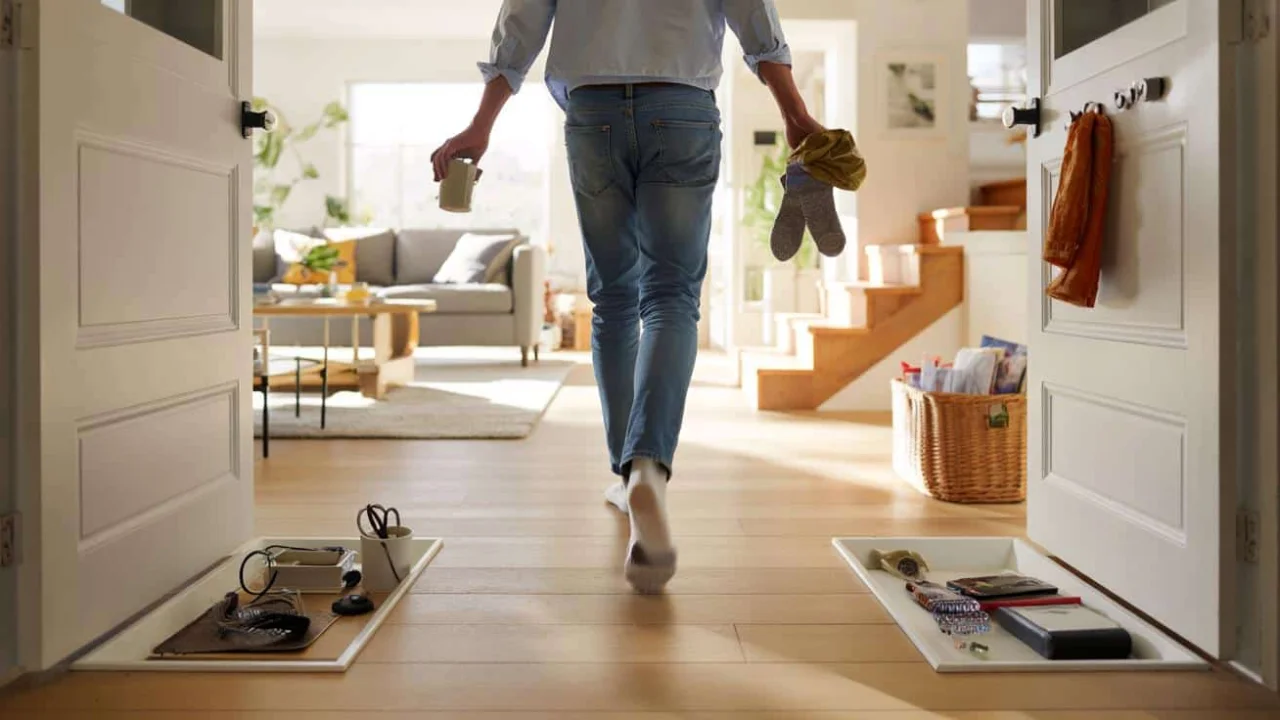
- Placed a decorative bowl by the door for keys, coins, and random pocket items
- Put a laundry basket in the bedroom for clothes that weren’t quite dirty but weren’t clean either
- Created a “mail station” where catalogs and bills naturally landed anyway
- Installed hooks along my most common walking paths
The magic wasn’t in forcing new habits – it was in designing systems that matched my existing house movement patterns.
Why This Approach Actually Sticks
Traditional organizing advice often fails because it assumes you’ll completely change how you move through your space. But your movement patterns are deeply ingrained, shaped by everything from your home’s layout to your energy levels throughout the day.
Working with your natural routes instead of against them creates what organizational experts call “sustainable systems.” You’re not relying on willpower or perfect discipline – you’re simply removing friction from processes that were already happening.
Interior designer Mark Thompson explains it this way: “The most successful home organization systems are almost invisible. They work so seamlessly with your natural behavior that maintaining them requires virtually no conscious effort.”
After three months of focusing on house movement patterns rather than traditional tidying, my home felt fundamentally different. Not pristine – but calm. Items had obvious homes that matched where I naturally wanted to put them. The constant low-level stress of navigating around clutter disappeared.
Most surprisingly, guests started commenting that my space felt “relaxing” and “organized” without looking sterile or overly staged. That’s because the organization followed natural human movement patterns rather than magazine-perfect aesthetics.
The mess didn’t disappear overnight, but it became manageable in a way that felt sustainable. More importantly, my home started feeling like it was designed for the way I actually lived, not the way I thought I should live.
FAQs
How long does it take to see results from changing movement patterns?
Most people notice a difference within 2-3 weeks, as your new routing habits become automatic and items stop accumulating in problem areas.
What if my family members have different movement patterns?
Map each person’s routes separately and create solutions that work for multiple patterns – like central drop zones that serve everyone’s natural paths.
Do I need to buy new storage solutions?
Usually no – most effective changes involve repositioning items you already own to match your natural movement patterns rather than buying new containers.
What’s the biggest mistake people make with this approach?
Trying to change too many routes at once instead of focusing on one high-traffic pattern first and letting success build momentum.
How do I identify my house movement patterns?
Spend one weekend observing where you naturally drop items and which routes you take most frequently – your clutter will show you exactly where your patterns are.
Will this work in small spaces or apartments?
Actually, smaller spaces often benefit more because every movement pattern is more concentrated and visible, making it easier to create efficient systems.

Related Posts