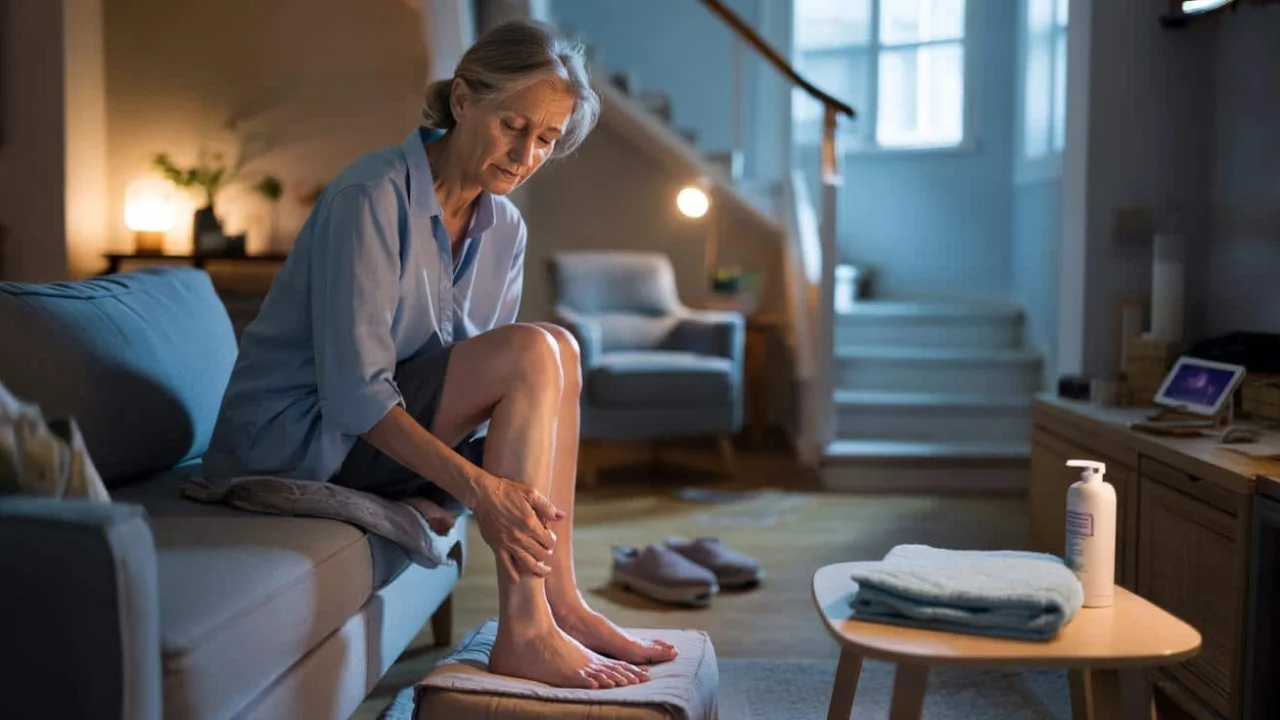
Margaret sat in her favorite armchair every evening at 6 PM, remote in one hand, a cup of tea cooling on the side table. But instead of relaxing into her routine, she found herself shifting uncomfortably. Her legs felt like they were filled with lead, heavy and sluggish after what should have been an easy day at home.
“It’s just my age,” she told her daughter during their weekly phone call. “Sixty-five isn’t twenty-five, you know.” But deep down, Margaret wondered if this was really normal. The heaviness in her legs was getting worse, and some evenings she had to grip the banister just to make it upstairs to bed.
What Margaret didn’t realize was that her leg circulation problems weren’t caused by getting older. They were caused by something she did every single day without thinking about it.
When sitting becomes the enemy of your circulation
The human body wasn’t designed for the amount of sitting most of us do daily. When we sit for hours at a time, our calf muscles stop working as pumps, and blood begins to pool in our lower legs. This creates a cascade of circulation issues that many people, especially those over 50, experience as heavy, tired legs.
Dr. Sarah Chen, a vascular specialist, explains it simply: “Your calf muscles are like a second heart for your legs. When they don’t contract regularly, blood struggles to return to your heart against gravity. The result is that familiar feeling of heavy, swollen legs by evening.”
The problem is particularly common among people who have transitioned to more sedentary lifestyles. Retirees, remote workers, and anyone spending long hours reading, watching TV, or using devices often develop these circulation patterns without realizing it.
Unlike serious vascular conditions, this type of leg circulation problem develops gradually. You might notice your socks leaving marks on your ankles, or feel like your legs are slightly swollen by bedtime. Many people dismiss these early signs as normal aging.
The warning signs your circulation is struggling
Recognizing leg circulation problems early can prevent them from worsening. The symptoms often build slowly, making them easy to overlook or blame on other factors.
- Heavy legs in the evening: Your legs feel weighted down, especially after sitting for long periods
- Ankle swelling: Mild puffiness that’s more noticeable at the end of the day
- Sock marks: Indentations from socks or shoes that take time to fade
- Restless legs at night: Difficulty getting comfortable or feeling like you need to move your legs
- Calf tightness: Muscles that feel contracted or cramped without obvious cause
- Fatigue after minimal activity: Feeling tired after short walks or light activities
“The most telling sign is when the heaviness follows a pattern,” notes Dr. Michael Torres, a circulation specialist. “If your legs feel worst after your most sedentary days, that’s your body telling you it needs more movement.”
Here’s what happens during different activities and how it affects your circulation:
| Activity | Circulation Impact | Risk Level |
|---|---|---|
| Sitting 4+ hours continuously | Blood pools significantly in lower legs | High |
| Standing still for long periods | Moderate pooling, muscle fatigue | Medium |
| Regular movement every hour | Good circulation maintenance | Low |
| Walking or light exercise | Active circulation boost | Very Low |
Simple changes that make legs feel lighter again
The good news about circulation-related leg heaviness is that it responds well to small, consistent changes. You don’t need to overhaul your entire lifestyle or start an intense exercise program.
The most effective approach involves breaking up long periods of inactivity with brief movement breaks. Setting a timer for every 45 minutes and moving for just 2-3 minutes can dramatically improve how your legs feel by evening.
Physical therapist Lisa Rodriguez recommends these simple circulation boosters: “Even while sitting, you can do ankle circles, calf raises, or flex your feet up and down. These tiny movements keep your muscle pumps working throughout the day.”
Effective movement breaks include:
- Heel raises: Stand and lift onto your toes 10-15 times
- Ankle pumps: Flex and point your feet while sitting
- Short walks: Even 50 steps around your home helps
- Calf stretches: Gentle stretching against a wall
- Leg elevation: Raise legs above heart level for 5 minutes
Compression socks can also provide significant relief, especially for people who must sit for work or travel. The gentle pressure helps prevent blood from pooling and reduces that end-of-day heaviness.
Why this matters more as we age
Leg circulation problems aren’t just about discomfort. Poor circulation can lead to more serious issues over time, including chronic venous insufficiency, blood clots, and persistent swelling.
As we age, our blood vessels naturally become less elastic, and our calf muscles may weaken. This makes the circulation system more dependent on regular movement to function properly. What might have been fine in your 30s can become problematic in your 50s and 60s.
“I see many patients who think heavy legs are just part of aging,” explains Dr. Patricia Williams, a geriatric medicine specialist. “But when we address the circulation component, they’re often amazed at how much better they feel. It’s not just about the legs – better circulation affects energy levels and overall well-being.”
People who address circulation problems early often see improvements within days. The legs feel lighter, sleep quality improves, and many report having more energy for activities they enjoy.
The key is consistency rather than intensity. Small, regular movements throughout the day are more beneficial than one long exercise session followed by hours of sitting.
FAQs
How quickly can I expect to see improvement in leg circulation?
Most people notice lighter-feeling legs within 3-5 days of regular movement breaks. Significant improvement typically occurs within 2-3 weeks of consistent changes.
Are compression socks necessary for circulation problems?
While not always necessary, compression socks can provide immediate relief and are especially helpful for people who must sit for long periods or travel frequently.
Can poor leg circulation be dangerous?
Circulation problems from prolonged sitting are usually not dangerous, but they can progress to more serious conditions. If you have sudden swelling, pain, or skin changes, consult a healthcare provider.
What’s the difference between circulation problems and varicose veins?
Circulation problems from inactivity cause temporary heaviness and swelling. Varicose veins involve permanent vein damage and usually require medical evaluation.
How many steps should I aim for daily to maintain good circulation?
While 10,000 steps is often cited, even 5,000-6,000 steps with regular movement breaks can significantly improve circulation. Quality and consistency matter more than total count.
Can diet affect leg circulation?
Yes, staying hydrated helps maintain blood volume, and reducing excess salt can minimize fluid retention. However, movement remains the most important factor for circulation.

Related Posts