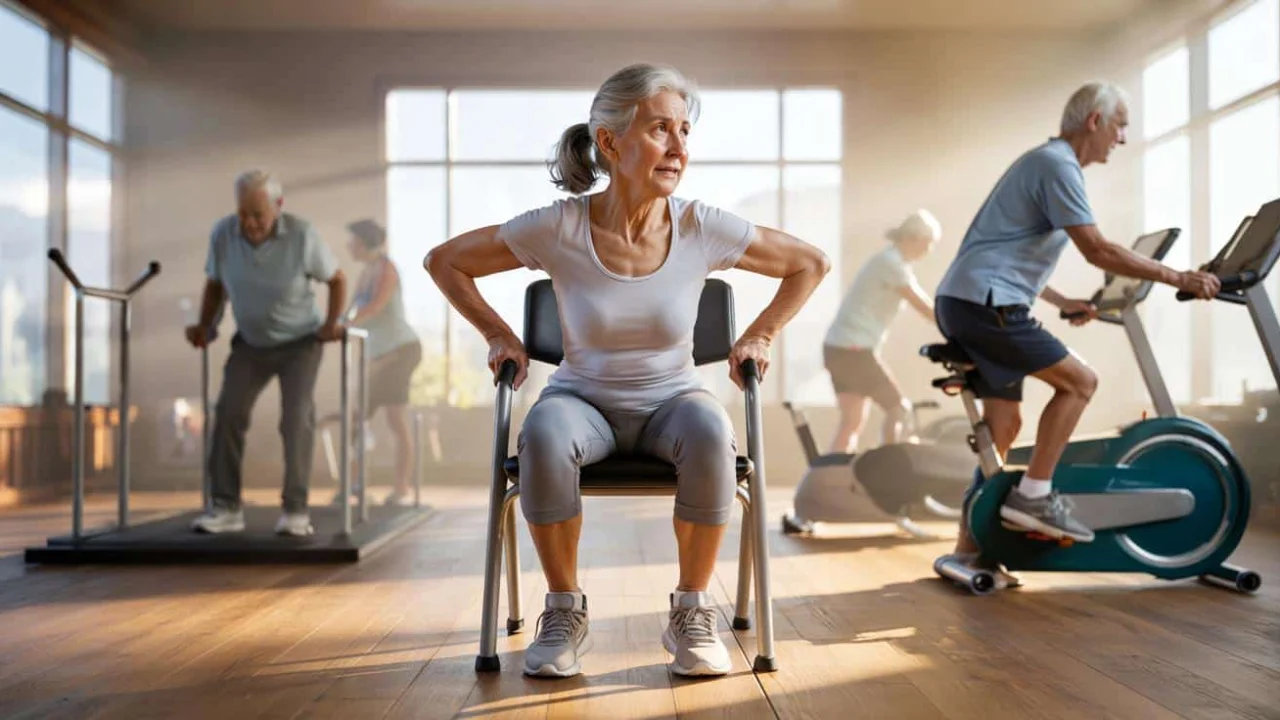
Margaret thought she was doing everything right. At 68, she walked her dog every morning, took yoga classes twice a week, and could still garden for hours without complaint. But one Tuesday, standing up from her favorite armchair felt different. Not painful exactly, just… harder. Like her body had forgotten how to do something it had done thousands of times before.
She brushed it off as a bad day. Then it happened again getting out of the car at the grocery store. And again rising from the dinner table. Margaret found herself using her hands to push off surfaces, compensating without even realizing it.
What Margaret didn’t know was that a critical muscle group had been quietly weakening for years, setting the stage for mobility challenges that could change everything about how she moved through the world.
The Hidden Engine of Your Movement
When most people think about staying mobile after 60, they focus on their knees, hips, or back. These are the body parts that usually hurt first or feel stiff after a long day. But the real powerhouse behind your ability to move confidently lies in an often-overlooked muscle group: your glutes.
Your glute muscles aren’t just about having a shapely backside. They’re the engine of your lower body, controlling nearly every movement you make. When you stand up from a chair, climb stairs, or simply walk across a room, your glutes are working behind the scenes to stabilize your pelvis and power your movement forward.
“Think of your glutes as the foundation of a house,” explains Dr. Sarah Chen, a geriatric physical therapist with over 15 years of experience. “When that foundation weakens, everything else starts to shift and compensate, leading to problems throughout the entire structure.”
After age 60, this muscle group mobility becomes even more crucial. Years of sitting at desks, in cars, and on couches put these powerful muscles into a kind of hibernation mode. They become less responsive, weaker, and less coordinated. The result? Your body starts finding workarounds that can lead to pain, instability, and increased fall risk.
Why Your Glutes Matter More Than Ever After 60
The connection between glute strength and overall mobility becomes crystal clear when you understand what these muscles actually do. Your glutes consist of three main muscles that work together like a well-orchestrated team:
- Gluteus maximus: The largest muscle in your body, responsible for standing up and powering forward movement
- Gluteus medius: Stabilizes your pelvis when you walk and prevents your hip from dropping
- Gluteus minimus: Works with the medius to keep you balanced and stable
When this muscle group mobility system breaks down, other parts of your body are forced to pick up the slack. Your knees start working harder to compensate for weak glutes, often leading to knee pain. Your lower back muscles tighten to provide stability your glutes should be giving, causing chronic back discomfort.
| Strong Glutes | Weak Glutes |
|---|---|
| Confident standing from chairs | Need to push off with hands |
| Stable walking on uneven surfaces | Increased risk of trips and falls |
| Pain-free stair climbing | Knee or back pain going up stairs |
| Quick recovery from stumbles | Difficulty catching balance |
“I see patients who can walk for miles but struggle to get out of a low chair because their glutes have essentially gone to sleep,” notes Dr. Michael Rodriguez, a sports medicine physician who specializes in aging athletes. “It’s like having a powerful car engine that’s been idling for so long, it’s forgotten how to accelerate.”
The Real-World Impact on Your Daily Life
The effects of weak glutes ripple through every aspect of daily living in ways you might not expect. That slight hesitation before standing up from a restaurant booth isn’t just stiffness – it’s your body compensating for muscles that should be doing the heavy lifting.
People with strong glute muscle group mobility report feeling more confident navigating crowded spaces, uneven sidewalks, and unexpected obstacles. They’re less likely to avoid activities they once enjoyed, like hiking with grandchildren or dancing at weddings.
The difference shows up in surprising places. Research from the Journal of Aging and Physical Activity found that adults over 60 with stronger hip muscles – primarily the glutes – were significantly less likely to experience falls. More importantly, they maintained their independence longer and reported higher quality of life scores.
“When your glutes are firing properly, everything else falls into place,” explains physical therapist Lisa Thompson, who works exclusively with older adults. “Patients tell me they feel like they got their body back.”
The good news? Unlike many age-related changes, glute weakness is largely reversible. These muscles respond well to targeted exercises, even in people who haven’t been active for years. Simple movements done consistently can reawaken dormant muscle fibers and restore much of their original function.
Simple Ways to Reactivate Your Glutes
Rebuilding muscle group mobility in your glutes doesn’t require expensive equipment or grueling workouts. The key is consistency and proper activation. Many people think they’re working their glutes when they’re actually using their back or leg muscles instead.
Start with basic movements that teach your glutes to fire correctly:
- Glute bridges: Lie on your back, knees bent, and lift your hips by squeezing your glutes
- Wall sits: Stand with your back against a wall and slowly slide down, focusing on pushing through your glutes to stand back up
- Step-ups: Use a sturdy step or curb, focusing on pushing through the heel of the stepping leg
- Clamshells: Lie on your side and lift your top knee while keeping feet together
The beauty of glute exercises is that many can be done at home with minimal equipment. Even better, improvements often come quickly. Many people notice increased stability and easier movement within just a few weeks of consistent practice.
“The biggest mistake I see is people giving up too early,” warns Dr. Chen. “Your glutes might have been asleep for years. Give them time to wake up and remember their job.”
For people who have been sedentary for extended periods, starting with gentle activation exercises and gradually building intensity works better than jumping into challenging workouts. The goal is to retrain the muscle group mobility system, not exhaust it.
FAQs
How quickly can I see improvements in my glute strength?
Most people notice some improvement in stability and ease of movement within 2-4 weeks of consistent exercises. Significant strength gains typically take 6-8 weeks.
Is it too late to strengthen my glutes if I’m over 70?
Absolutely not. Muscle tissue responds to resistance training at any age, and glutes are particularly responsive to targeted exercises even in people over 80.
Can weak glutes cause back pain?
Yes, when glutes don’t provide proper pelvic stability, the lower back muscles often compensate, leading to tension and pain in the lumbar spine.
How often should I do glute exercises?
Start with 2-3 times per week, allowing rest days between sessions. As you get stronger, you can increase frequency to daily activation exercises.
What’s the most important glute exercise for older adults?
The glute bridge is excellent because it’s safe, effective, and directly mimics the movement of standing up from a seated position.
Should I see a professional before starting glute exercises?
If you have existing hip, knee, or back problems, consulting a physical therapist can help you choose the safest and most effective exercises for your situation.

Related Posts